
Reviewed · CYCLING TOURS
Budapest: Private Fahrradtour – optional mit E-Bikes
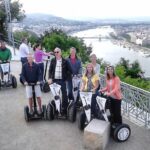
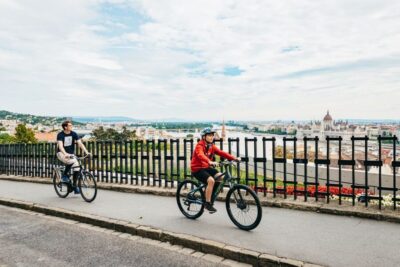
Budapest looks better from a bike seat. This private ride strings together major sights, including UNESCO areas like Andrássy Avenue and the Danube Banks, in a way that feels relaxed and easy to share. I especially like the small-group setup, plus the option to choose e-bikes if you want to save your legs for later.
One thing to plan for, it is not for beginners and you need moderate fitness. The route is active, and there is also a weight limit of 110 kg.
If you care about good guiding, this is a standout point. In past rider feedback, the guide named Esther (Eszter) was praised for being friendly and safe, and the bikes were described as easy to use and in excellent condition.
Key highlights to know before you go
- Private group, up to 6 people: You ride as one group with a guide, not in a big crowd.
- UNESCO focus without ticket stress: You see key areas like Andrássy Avenue and the Danube Banks mostly from the bike.
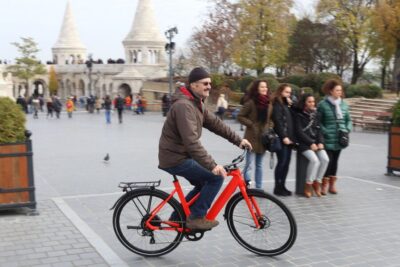
- Optional e-bike support: Pedelecs are available, great for longer sights and smoother cruising.
- Most stops are exterior photo stops: You do not enter places like the Opera, House of Terror, or the baths.
- A classic Budapest loop: City center, bridges, Parliament area, Castle Garden zone, and major spa landmarks.
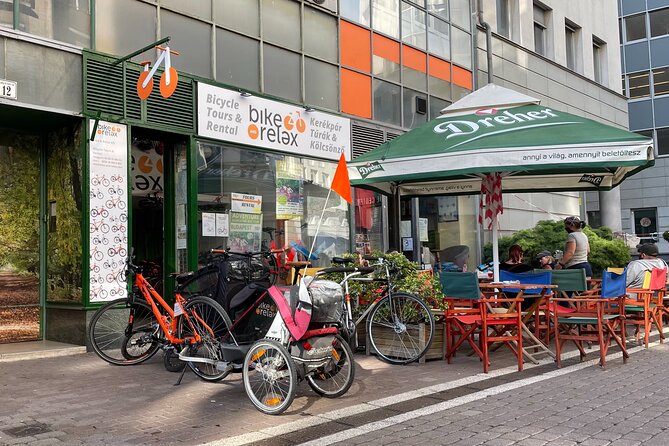
- Central meeting point: Madách Imre út 12, 1075, with a simple local landmark nearby to help you find it.
In This Review
- Price and private-group value for up to six riders
- Getting started at Madách Imre út 12, 1075, at 10:30 am
- Gozsdu Udvar, then the State Opera and UNESCO Andrássy Avenue
- House of Terror pass-by, then Heroes’ Square in 15 minutes
- City Park, the Vajdahunyad Castle look-alike, and Széchenyi Baths from the outside
- Liszt Ferenc Square, Elizabeth Square, and a smooth ride through the Jewish Quarter
- St. Stephen’s Basilica exterior views, Szabadság tér memorial reminders, and Parliament panaromas
- Bridges that matter: Margaret Bridge, Batthyany Square, Clark Adam, and Szechenyi Lanchid
- Castle Garden, Erzsébet Bridge, Rudas and St. Gellért Baths along the river bank
- Liberty Bridge, Fővám Square, the Grand Market Hall pass, and the Great Synagogue view
- How the ride actually feels: short stops, long sight lines, and easy planning
- Who should choose Bike and Relax for a Budapest first swing
- Should you book this private Budapest e-bike tour?
- FAQ
- What is the price for this Budapest private bike tour?
- How long does the tour last?
- Is this tour available in English?
- Where do we meet for the tour?
- What time does the tour start?
- Are bikes or e-bikes included?
- Do we enter the attractions during the tour?
- What fitness level do I need?
- Is there a weight limit?
- Do you need good weather?
Price and private-group value for up to six riders
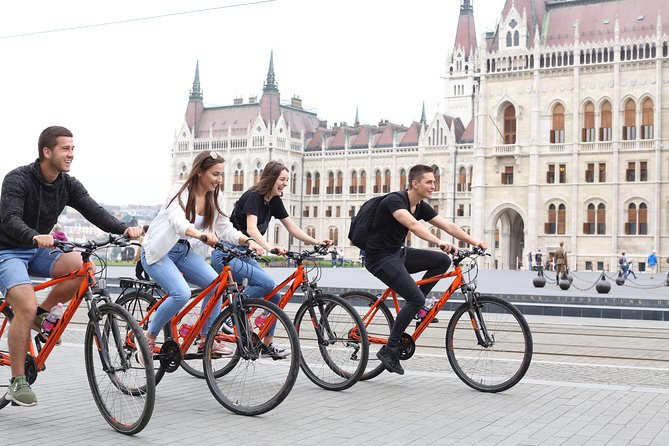
This tour is priced at $435.54 per group for up to 6 people. That changes the math in a good way if you are traveling with friends or family, because you are paying for one guided experience rather than a solo ticket price multiplied by everyone in your group.
Here is the value angle I would use: the price includes either a regular bicycle or an e-bike, a bottle of water, and the guide. You also get the time efficiency of a route that hits a lot of Budapest highlights in one go, without relying on hop-on transit or lining up to enter paid attractions.
The only cost you are likely to add is optional food or souvenirs, because there are no included admissions. If you want indoor time inside museums, churches, or baths, you would need to budget for those yourself, or take a different day for deeper entry.
Getting started at Madách Imre út 12, 1075, at 10:30 am
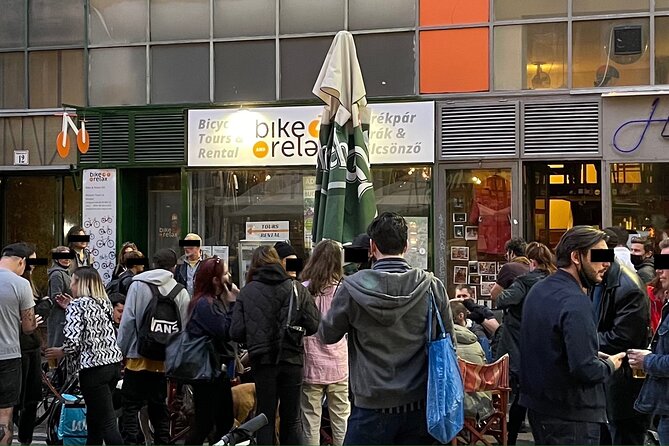
Your tour starts and ends at Madách Imre út 12, 1075 Budapest. The meeting location is close to public transport, and the route begins behind Madách Square, with the street connecting Madách Square to Gozsdu Court.
Look for the café named Hivatal near the start point. That sounds small, but it matters because the meeting spot is right where you want it, central and easy to orient to.
The tour begins at 10:30 am, and it is listed as about 2 to 4 hours. That time window is realistic for a sightseeing bike loop where most stops are short orientation stops plus photo time, not long museum visits.
Gozsdu Udvar, then the State Opera and UNESCO Andrássy Avenue
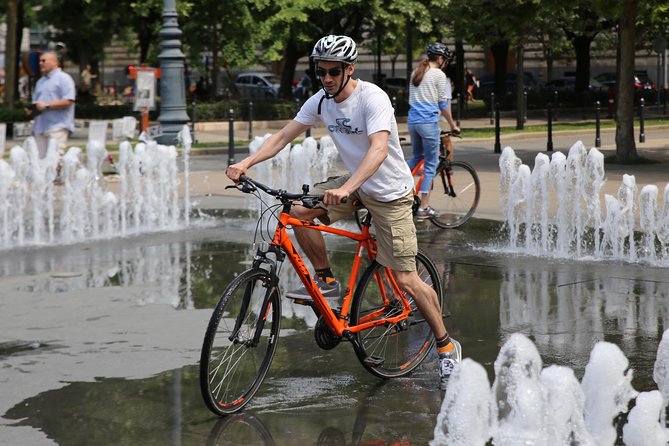
Stop 1 is Gozsdu Udvar, starting and ending at the meeting street location. You get a quick orientation moment right in the action, with Hivatal as your handy landmark.
From there, you roll to the Hungarian State Opera. You will not go inside, but you do get the architectural story: the building is credited to Michael Ybl and sits on Andrássy Street, which is part of the UNESCO-protected Andrássy Avenue ensemble. You are also briefed on the late 19th century architectural styles and the history of the M1 subway line. Even without entering, that context helps you read the façade instead of just taking a quick photo.
Next comes Andrássy Avenue, the big signature drag that connects the city center toward Hero’s Square and City Park. You ride past landmarks and major streets, including Nagymező Street (often described as the Broadway of Budapest), plus Liszt Square and the Ring Roads. You also pass the House of Terror area, setting up what comes next. For many people, this segment is the reason they book: it gives you that classic “Budapest looks like this” feeling fast.
More flat spins along the embankments:
- Budapest: Grand Sightseeing Bike Tour
★ 4.8 · 984 reviews - Budapest Highlights Bike Tour
★ 5.0 · 770 reviews - Budapest: Guided City Discovery Bike Tour
★ 4.7 · 702 reviews
House of Terror pass-by, then Heroes’ Square in 15 minutes
The House of Terror Museum stop is short and exterior. The building served as former GESTAPO headquarters and later became a communist-era prison, now turned into a museum. Even though you will not enter, the description includes a striking detail: a part of the Berlin Wall is in front. That means you are not just passing a name, you are getting a visible reminder tied to 20th century history.
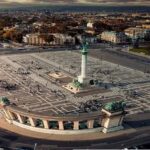
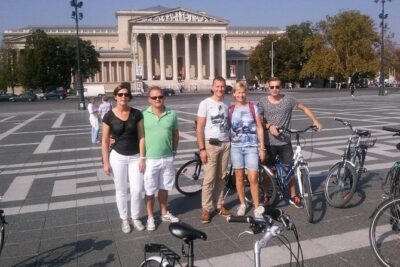
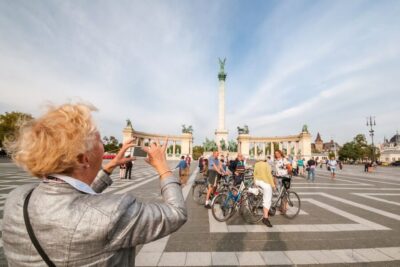
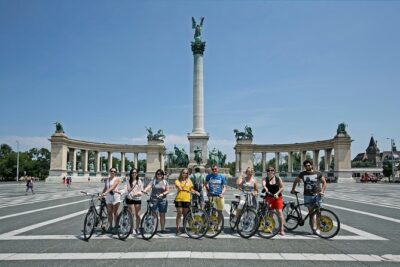
Then you head to Heroes’ Square, designed to celebrate the 1000-year anniversary of Hungary in 1896. This stop is about 15 minutes, and it is built for overview mode. You get a quick “from King Stephen to Kossuth” sweep of Central European history, without drowning in dates. For a first-time visitor, this is a clever move. It gives you a map in your head before you start picking what to revisit later.
City Park, the Vajdahunyad Castle look-alike, and Széchenyi Baths from the outside
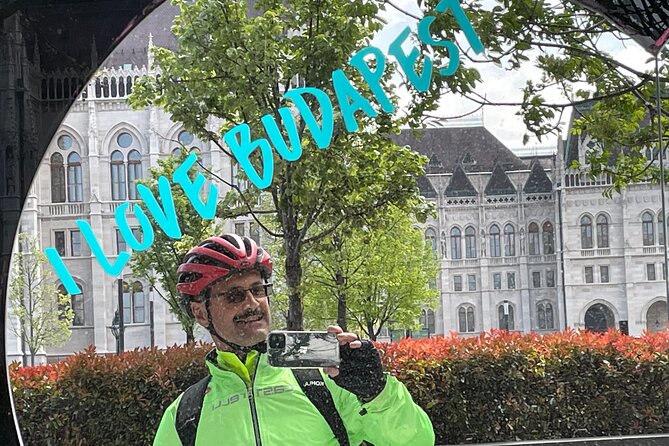
You move into City Park (Varosliget) and the atmosphere shifts from street scenes to a park grid. Expect about 10 minutes at the park area, which is listed as roughly one square kilometer. The note that redesigning is happening tells you to expect some construction or changing views, but it does not stop it from being a popular leisure space.
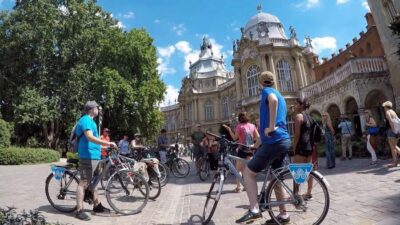
Stop 6 is Vajdahunyad Castle, described as a fake castle in the city park. The reason is part of the charm: it is an intentionally staged way to understand castle ideas and silhouettes, and you also get a mention of a statue of Anonymous. The key for you, you are seeing a Budapest “idea of a castle” without needing a ticket.
Stop 7 is City Park itself, then stop 8 brings you to Széchenyi Baths and Pool. Again, you do not enter. But the tour frames it as Budapest’s largest spa in the park, connected to the long bathing tradition of Hungary. You get a clear thread from Roman Empire bathing culture, through Ottoman times, to the modern landmark status. This is one of those stops where even a pass-by feels meaningful because bathing is a huge part of how people experience Budapest.
Liszt Ferenc Square, Elizabeth Square, and a smooth ride through the Jewish Quarter
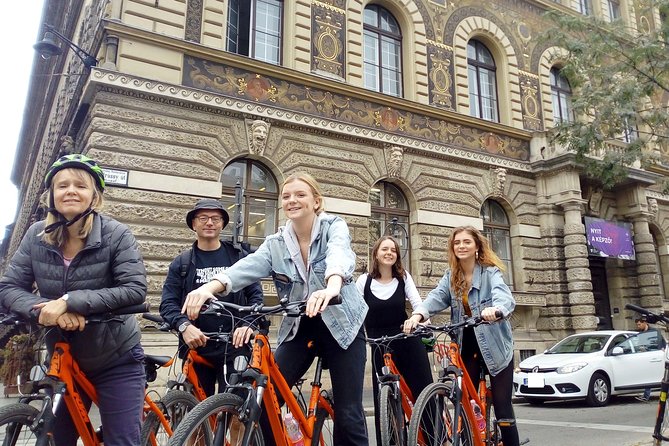
Back toward downtown, you hit Liszt Ferenc Square. You meet Liszt at the Music Academy, and the building is described as Art Deco style, also known locally as Secession-style. This is a good reminder that Budapest is not only grand churches and river views, it also does design and style, especially around music culture.
A short ride later you are on Kiraly Street along the Jewish Quarter. This is where the vibe shifts again. You pass streets associated with ruin pubs, and you get a look at the Gozsdu Court passage way. This kind of stop works well on a bike because you can move with the neighborhood, rather than being stuck in a single storefront line.
Then comes Elizabeth Square, a central traffic junction and a meeting point. The tour notes the Aquarium and an underground bar, plus the legendary fröccs terrace, a popular summer drink of white wine and soda. Even if you do not stop for a drink, the bike view helps you understand where people gather and how the neighborhoods connect.
This section is also efficient for planning. After seeing Liszt Ferenc Square and Elizabeth Square on wheels, you will likely remember them later when you choose where to eat or where to meet friends.
Still to cross in Budapest
- Budapest: Guided Downtown Electric Bike Tour★ 4.9 · 595 reviews
- Budapest: E-Bike Guided Tour and Castle Hill★ 4.9 · 241 reviews
- Budapest: Guided Bike & E-bike Tour with a Goulash★ 4.8 · 220 reviews
St. Stephen’s Basilica exterior views, Szabadság tér memorial reminders, and Parliament panaromas
Stop 12 is St. Stephen’s Basilica (Szent Istvan Bazilika). You do not enter, but the tour points out a specific feature: the right hand of St. Stephen under glass. That detail matters because it turns the basilica from “a big church” into “a recognizable symbol.”
Stop 13 is Szabadság tér, described with two sides: one is like the Wall Street of Budapest, and the other is tied to difficult history. You are reminded to consider Holocaust and World War II memories in Budapest, and to pay attention to controversial memorials. This is history presented carefully, and it is done in a short window so you keep moving instead of getting overloaded.
Then you reach the big postcard moment: the Hungarian Parliament Building. You do not enter, but you get the landmark role and the note about being operational and beautifully renovated. You also get a promised view payoff: when you turn, you see a panorama of the Danube and the Buda side. If you want one “stop and breathe” moment, this is where you do it.
Bridges that matter: Margaret Bridge, Batthyany Square, Clark Adam, and Szechenyi Lanchid
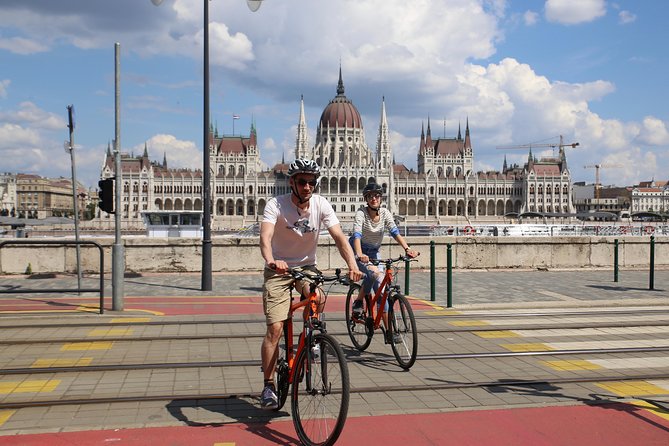
Now the ride becomes all about movement across water. Stop 15 is Margaret Bridge, described as the historically second bridge over the Danube, with a good bicycle path and direct access to Margaret Island. Even if you do not detour, this bridge helps you connect sights into one continuous river story.
Stop 16 is Batthyány Square. The quick pitch is that it is a history and architecture photo zone, with baroque and rococo examples, plus Count Batthyány. It is also marked as a best picture spot for the Parliament across the river.
Stop 17 is Clark Adam Square (Clark Adam ter), called the zero millage point of Hungary. That is a fun fact that gives you a concrete sense of scale, like the country has a measuring point right here.
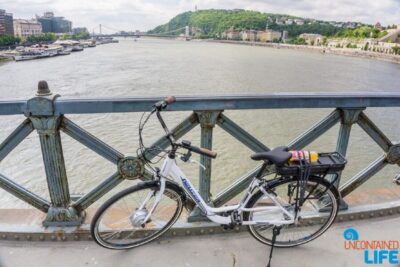
Stop 18 is Szechenyi Lanchid, described as the first bridge across the Danube finished in 1849 by Adam Clark. If you like engineering history, you get the “this shaped the city” feeling in a few minutes, and it keeps the ride from feeling like only sightseeing stops.
Castle Garden, Erzsébet Bridge, Rudas and St. Gellért Baths along the river bank
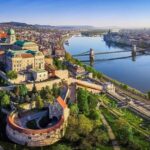
Stop 19 is Castle Garden, another Michael Ybl project. You see a late 19th century style building, and behind the garden you can also notice parts of the medieval castle of King Béla. There is an elevator leading up to the Royal Palace, though the tour does not mention going there. For you, it is useful because it frames where the city “climbs,” and where views tend to open up.
Stop 20 is Erzsébet Bridge, named for Queen Elisabeth (Sissi). The tour notes it as very popular, and you pass under it on the river bank toward Gellért Hill.
Stop 21 is Gellért Hill, where you pass for views of the Statue of St. Gerald (Gellért) and his sad story. The time here is short, but on a bike you can still get that “river and city in one line” view.
Stops 22 and 23 bring the bath landmarks. First is Rudas Baths, a Turkish spa with roots in Ottoman times and later rebuilds, now with rooftop pool, restaurant, and bar features. You pass by to see it, no entry.
Then it is St. Gellért Thermal Bath and Swimming Pool, described as the third famous spa, with an Art Deco style building. It overlooks Liberty Bridge and the Danube, and the route includes a crossing that keeps you near the river. You will likely understand Budapest’s bathing culture much faster after seeing these places clustered like this.
Liberty Bridge, Fővám Square, the Grand Market Hall pass, and the Great Synagogue view
Stop 24 is Liberty Bridge (Szabadság hid), called the most popular bridge in Budapest. You get a specific technical note: it is an iron construction from the 19th century, and a technical masterpiece at the time. The stop also flags it as a common sunset meeting point, which matters because you will remember the bridge as a “go-to viewpoint” even when you are riding earlier in the day.
Stop 25 is Fővám Square, with the University of Economics. It is said to have been originally the main customs office, which explains the “main customs square” name. The tour also routes you past the Grand Market Hall, still a working market for locals plus tourist browsing. You get a quick note about the steel construction, so you know what you are looking at.
Finally, you pass the National Museum on the Ring Road. The tour notes it was the first public building outside downtown, which helped motivate rich families to build palaces around it, and it played a role in national identity during the late 19th century. That is a lot of influence packed into a pass-by, and it helps connect the city’s development to what you see now.
Stop 26 is the Great/Central Synagogue (Nagy Zsinagóga) at the border of the Jewish Quarter. You stop to see it in Moorish style, but you do not enter. Still, it is a strong exterior capstone for a route that mixes architecture, history, and neighborhoods.
How the ride actually feels: short stops, long sight lines, and easy planning
This tour is built around quick, digestible stops. Many of the listed stops are around 5 to 20 minutes, which means you get context without losing half a day. If you are the type of traveler who hates slow lines and wants to keep momentum, this structure helps.
The flipside is that you will not get deep interior time. The Opera, House of Terror, Heroes’ Square, the basilica, Parliament, and all the baths are handled as pass-by or exterior viewing. So if your dream Budapest day is museums and indoor exploring, you will need to pair this with separate time blocks for ticketed entrances.
That said, it is a smart “getting oriented” approach. After rolling through Andrássy Avenue, crossing multiple Danube bridges, and seeing the bath complexes from the street level, you will understand where your next day should be spent. It is also a practical way to learn the city layout, because bikes naturally connect bridges to neighborhoods.
On bikes, comfort matters. You get a helmet that is noted as not required, plus water included. The tour also says it is not for beginners and has a weight limit of 110 kg, so the safest plan is to choose your bike type wisely. If your legs want help, the e-bike option is there for a reason.
Who should choose Bike and Relax for a Budapest first swing
This private Budapest bike tour is a great fit if you want:
- A guide-led route through major highlights like UNESCO areas, Parliament, and the Danube corridor
- A small-group experience for up to six people
- Mostly exterior sightseeing so you do not burn time on admissions
It is not a fit if:
- You are a true beginner with limited cycling comfort
- You are traveling with children who cannot be accompanied by adults
- You have needs that conflict with the stated moderate fitness requirement
- You exceed the 110 kg limit
If your group likes to plan around food and neighborhoods, this route helps you identify where you might want to return. The stops around Liszt Ferenc Square, Elizabeth Square, and the Jewish Quarter area are especially useful for that.
Should you book this private Budapest e-bike tour?
I would book it if you want a guided, efficient loop that gives you real context for what you see, without turning your day into a line-by-line museum crawl. The value works best when you fill the group size, because $435.54 per group becomes a very manageable per-person spend for guide time plus bikes or e-bikes.
I would skip it if you mainly want indoor entry experiences, or if you are uncomfortable with an active cycling day. This is a “ride and see” tour, not a “sit inside and study” tour.
If you are planning a first day in Budapest, this kind of orientation ride can help you decide what to target next, especially when the route covers Andrássy Avenue, multiple Danube bridges, and the bath landmarks in one sweep.
FAQ
What is the price for this Budapest private bike tour?
It is priced at $435.54 per group, for groups of up to 6 people.
How long does the tour last?
The tour lasts about 2 to 4 hours.
Is this tour available in English?
Yes, it is offered in English.
Where do we meet for the tour?
The meeting point is Budapest, Madách Imre út 12, 1075 Hungary. The tour ends back at the same meeting point.
What time does the tour start?
The start time listed is 10:30 am.
Are bikes or e-bikes included?
Yes. You get a bicycle or an e-bike as part of the tour, along with a water bottle and a guide.
Do we enter the attractions during the tour?
No. There are no included admissions, and the tour notes that you will not enter places such as the Opera, House of Terror, the basilica, Parliament, or the bath sites.
What fitness level do I need?
The tour requires moderate physical fitness and is not for beginners.
Is there a weight limit?
Yes, it is not for participants with more than 110 kg.
Do you need good weather?
Yes. The experience requires good weather, and if it is canceled due to poor weather, you will be offered a different date or a full refund.
The newest crossings added in Budapest


Cycling Tours, compared.
Browse the lists this tour appears in