Reviewed · GUIDED
Budapest: Official Guided Tour of the House of Music,Hungary
Budapest’s House of Music is a sound-minded building. The undulating, leaf-like metal roof and glass-heavy interiors make the architecture feel alive, and the tour is built to explain how it all works. I especially like the spiral staircase and the City Park setting, but one heads-up: this is architecture and sound focused, not a full museum exhibition visit.
You start in the foyer, then your guide steers you through the spaces that connect music education to design details you might miss on your own. In the best cases, you even hear a rehearsal, which turns the acoustics talk into something you can feel. The guide I keep hearing about is Dora, and her tours are consistently described as high-energy, question-friendly, and really good at putting sound design into everyday terms.
In This Review
- Key things to know before you go
- House of Music in Budapest’s City Park: why this building feels different
- Starting in the foyer, then stepping into the roof story
- The outdoor to indoor flow: glass walls, open spaces, and levels
- Architecture you can feel: concrete, wood, and the warm side of exposed structure
- The spiral staircase: the photo spot that also teaches you how sound behaves
- The concert hall and library stops: what you actually get to see
- Acoustics explained in a way you can use later
- Sustainability features: geothermal energy and rainwater harvesting
- What is not included, and how to decide if that matters to you
- Price and value for $13 per person
- Tour pace, language, and who should book
- Practical tips to get the most from your hour
- Should you book this House of Music guided tour?
- FAQ
- How long is the Budapest House of Music official guided tour?
- What language is the live tour guide?
- Where do I meet the guide?
- Is the tour wheelchair accessible?
- Is this tour suitable for children?
- Are pets allowed?
- What is included in the tour?
- What is not included?
- Can I expect to hear a performance?
- How much does it cost?
Key things to know before you go
- Sou Fujimoto’s design language is everywhere, from the roof canopy to the way indoor spaces flow into the park feel
- That undulating roof is not just pretty, it is tied to how light and acoustics work inside
- The spiral staircase is the visual anchor, and the tour helps you notice the details instead of just walking past
- Concert hall acoustics get explained in plain language, with a chance you might hear a rehearsal if timing lines up
- Geothermal energy and rainwater harvesting show up as part of the story, not as a footnote
- You will see major public spaces, but not the exhibitions, Sound dome, or Creative sound space
House of Music in Budapest’s City Park: why this building feels different
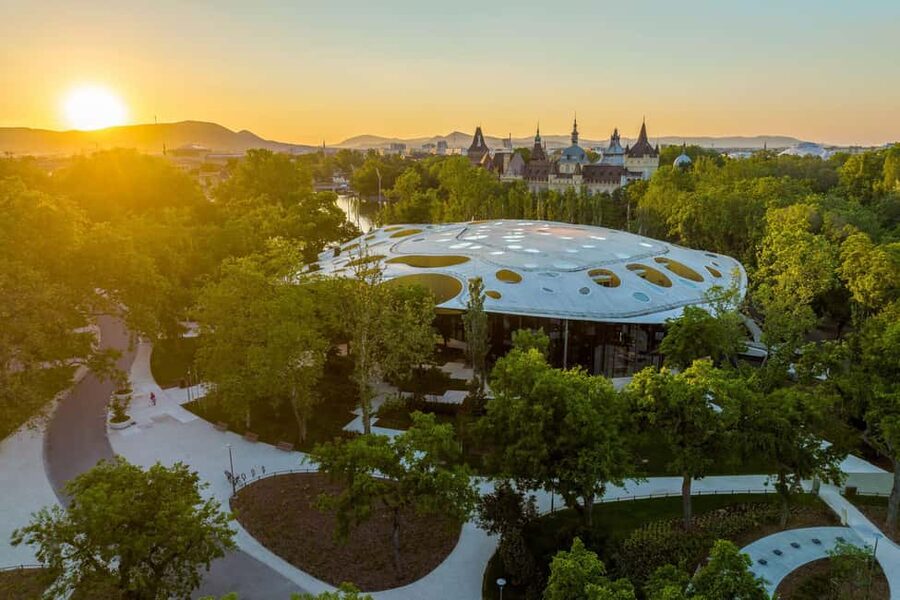
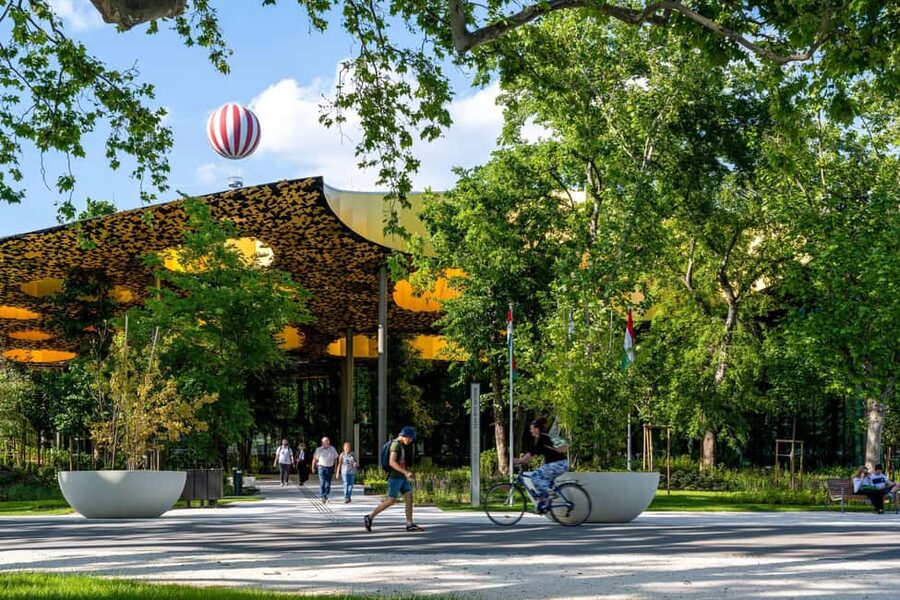
The House of Music sits in Budapest’s City Park, and that context changes how you experience it. You are not just looking at a museum facade, you are walking through a building that keeps reminding you it is meant to be part of the outdoors. The design is by Japanese architect Sou Fujimoto, and the whole place reads like an experiment in light, sound, and open space.
Even if you are not an architecture superfan, this tour gives you a practical way to look. Instead of treating the building like a single photo stop, you learn what to notice: roof shape, material choices, sight lines through glass, and the way levels create places for community and music education.
Starting in the foyer, then stepping into the roof story
The meeting point is inside the foyer, so you can get your bearings fast without hunting around. From there, the tour begins by shifting your attention outward first, because the building’s roof is the first clue to how the whole concept works.
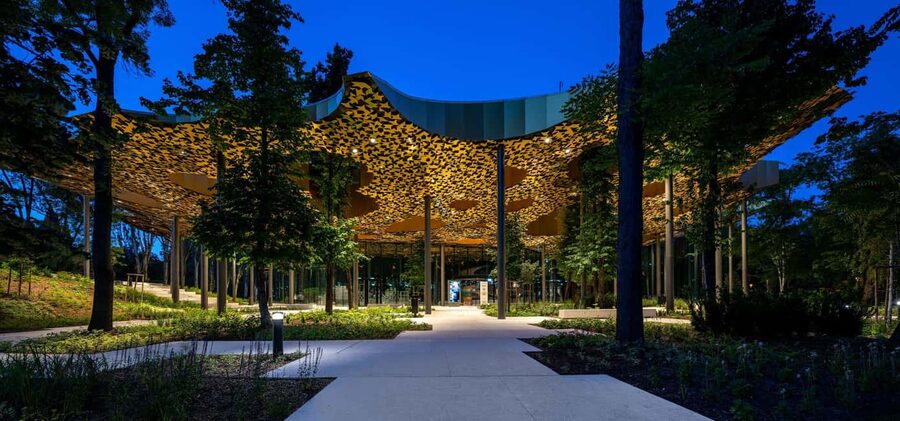
Expect the guide to point out the undulating canopy made of thousands of leaf-like metal elements. You will also hear about the circular openings, and why the roof is doing more than decoration. The acoustics and the natural lighting goals are tied to this exterior structure, so the tour keeps returning to it like a theme.
Still to cross in Budapest
- Budapest: City Highlights Sightseeing Cruise
★ 4.6 · 43,981 reviews - Budapest: Unlimited Prosecco, Beer and Aperol Spritz Cruise
★ 4.8 · 37,304 reviews - Budapest: Széchenyi Spa Day Ticket with Optional Upgrades
★ 4.3 · 23,911 reviews
The outdoor to indoor flow: glass walls, open spaces, and levels
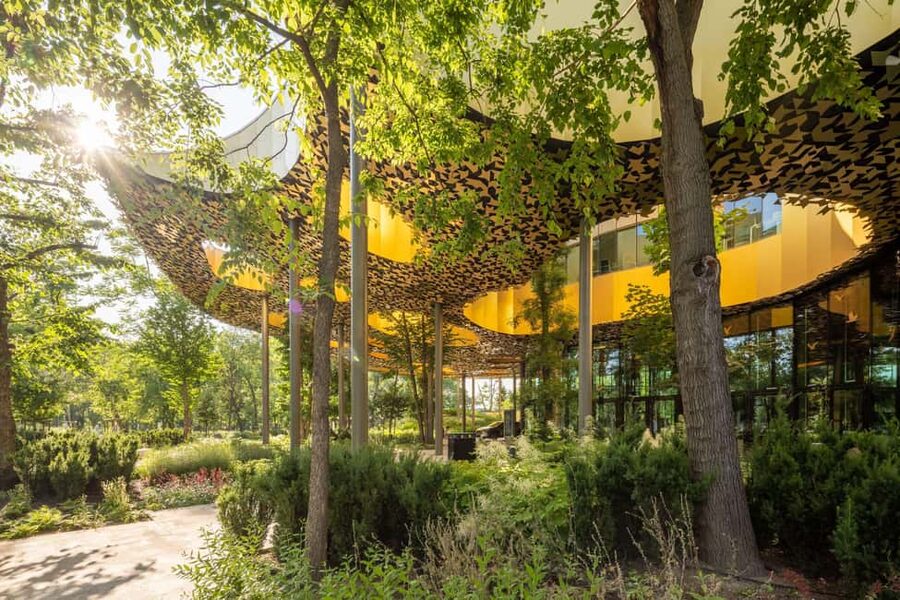
Once inside, the emphasis stays on openness. The building uses lots of glass, so daylight fills the interior and you feel connected to City Park even when you are indoors.
One of the most helpful parts of the guided approach is how it interprets the design as a transition, not a cutoff. Your guide will talk about how the building is conceived as a continuation of the park, blurring the boundary between inside and outside. That means you are not just touring rooms, you are following a spatial idea as it shifts from outside views to sheltered public levels.
The tour also highlights multiple levels and open spaces made for community engagement and music education. The key point is that you get the design logic behind those spaces, even though the tour does not include full access to the exhibitions.
Architecture you can feel: concrete, wood, and the warm side of exposed structure
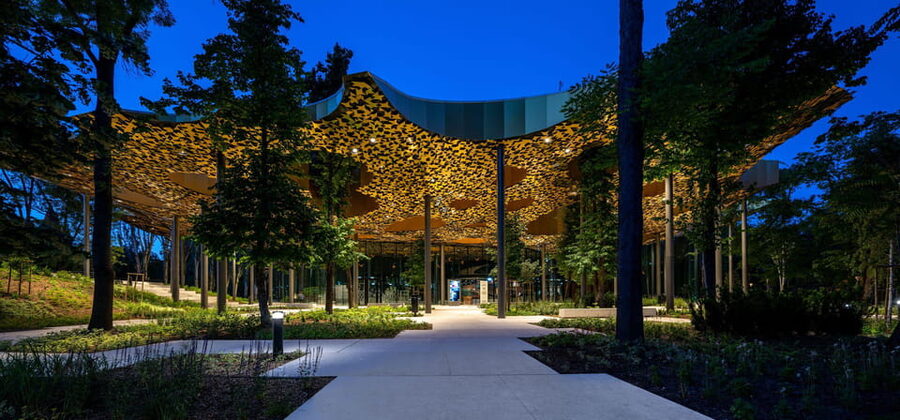
Inside, you will spend time looking at the structure itself. The tour focuses on exposed concrete surfaces and intricate wooden elements that help soften the feel of raw architecture.
This is one reason the guide matters. Instead of a generic walk-through, you get explanations that connect materials to atmosphere. You learn what the building is trying to do with warmth, visibility, and how people are supposed to move through it.
If you like design details, this portion is where you get your money’s worth in understanding, not just sightseeing.
The spiral staircase: the photo spot that also teaches you how sound behaves
The spiral staircase is described as an impressive work of art, and it is the kind of feature that makes you slow down. On a tour, you do not just snap a picture and move on. You get prompted to notice the form and how the building’s geometry shapes the experience.
This staircase also acts like a mental map. As the guide explains what the performance spaces are designed to do, you start to connect the staircase’s dramatic form to the bigger idea: sound and space are engineered together here. That is a big part of why the tour is aimed at music lovers and architecture lovers at the same time.
Back across the water in Budapest:
- Budapest: Nighttime or Daytime Sightseeing Cruise★ 4.2 · 21,062 reviews
- Budapest: By Night Sightseeing Cruise with Welcome Drink★ 4.3 · 15,533 reviews
- Budapest: St. Stephen’s Basilica Entry with Options★ 4.6 · 12,322 reviews
The concert hall and library stops: what you actually get to see
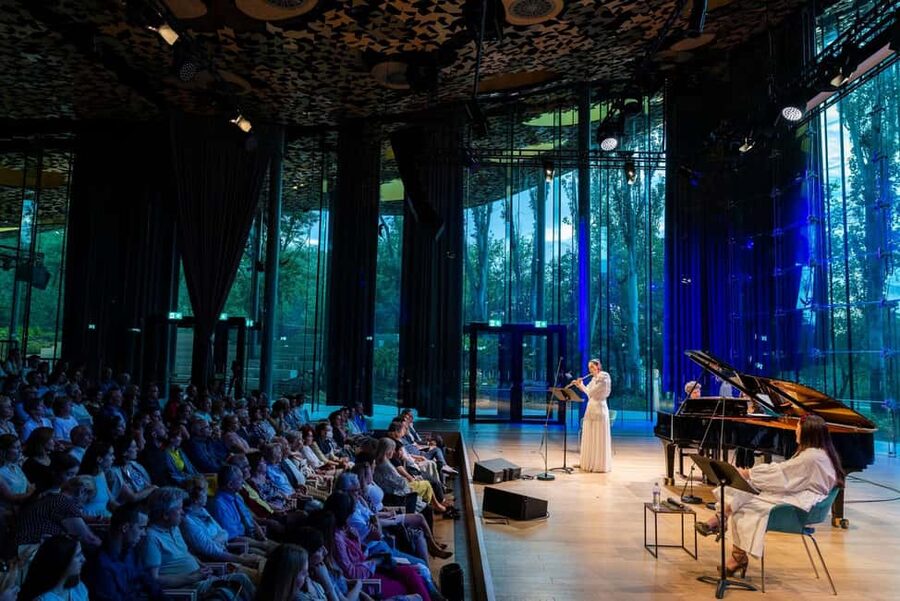
The tour includes access to key areas like the concert hall and the library and archives. That matters because it is not only about the building from the outside. You get to see how the interior is laid out and how the main public spaces function.
There is also a gift shop stop included. It may sound minor, but it is a nice practical touch. If you want a Budapest souvenir tied to the music theme, you will have the chance right after the main building highlights.
Acoustics explained in a way you can use later
Sound is the secret ingredient here, and the guide does the heavy lifting. During the tour, you get explanations about how the building’s shape, materials, and roof structure are designed to optimize acoustics in performance spaces and public areas.
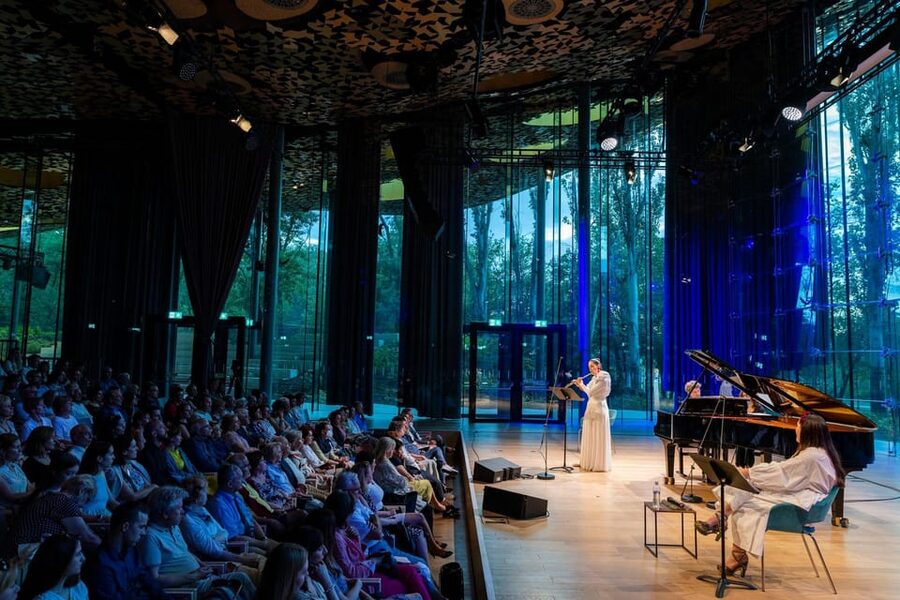
You cannot sit through a full concert during this tour. But that does not mean the sound focus is theoretical. In at least some time slots, the guide may mention that you are lucky enough to listen to a rehearsal, which can make the acoustics talk click.
If you are the kind of person who likes music in a technical way, this is a fun stop. If you simply enjoy good spaces, the tour still gives you something tangible to notice, like how open volumes and surfaces affect how sound travels.
Sustainability features: geothermal energy and rainwater harvesting
This building also has a sustainability chapter, and it is part of what the guide is expected to explain. You will hear about geothermal energy and rainwater harvesting as part of the overall design approach.
What I like about including this in a guided tour is that it stays connected to the building story. It is not an aside, it is part of why the architects treated the place as a long-term cultural facility. You end up with a more complete picture of what modern architecture can do, especially when it is in a public park setting.
What is not included, and how to decide if that matters to you
This tour does not include entry to exhibitions. It also does not include access to the Sound dome or the Creative sound space.
So if your dream visit is hanging out in interactive exhibits or spending time in specialty audio rooms, this one may feel limiting. On the other hand, if you are mostly here for the building itself, the acoustics concepts, and the way the spaces are designed for music education and public life, this guided format fits very well.
Price and value for $13 per person
At about $13 per person for a 1-hour guided tour, the value is strong because you are paying for interpretation. You are not just paying for admission to a building, you are paying for a guide to translate design choices into something you can actually understand in an hour.
Also, the time length works in your favor. One hour is long enough to see the major architectural highlights, but short enough that it does not force you into a half-day commitment.
If you only have a limited window in Budapest, this is an efficient pick, especially alongside other City Park sights.
Tour pace, language, and who should book
The tour is live, guided in English, and is wheelchair accessible. It lasts 1 hour, and the meeting point is the foyer, so it is straightforward once you arrive.
This tour is not suitable for children under 15, so plan accordingly if you are traveling with younger kids. If you are a teenager or adult, you will likely get more out of the architecture and sound explanations.
For architecture lovers, this is a high-hit-rate stop. For music fans, it is also worthwhile because the acoustics discussion is built into the structure of the visit.
Practical tips to get the most from your hour
Go with curiosity, not just a camera. When the guide points out roof shape, circular openings, glass, and material choices, these details make more sense when you pause and look in the direction they indicate.
Wear comfortable shoes for the indoor stairways and the time spent moving between viewpoints. And if your schedule allows, try to pick a time where rehearsals might be possible, because hearing sound in the space can turn the tour from interesting into memorable.
If you have already booked other City Park stops, you can stack this without stressing your day. It is a focused hour, not a full museum marathon.
Should you book this House of Music guided tour?
Book it if you want a guided, architectural approach to one of Budapest’s most talked-about modern buildings, especially with the sound-and-acoustics angle made clear. The spiral staircase, the roof design, and the explanations tying acoustics to geometry and materials are the big reasons to choose the guided version.
Skip or reconsider if you are mainly chasing exhibition access or hands-on sound spaces like the Sound dome and Creative sound space, because those are not included here. Also, if you prefer a casual browse without guided interpretation, you might find the tour format too structured.
If you like guided context and want your visit to make sense fast, this is a solid, good-value way to experience the House of Music.
FAQ
How long is the Budapest House of Music official guided tour?
It runs for 1 hour.
What language is the live tour guide?
The tour guide speaks English.
Where do I meet the guide?
You meet inside the foyer.
Is the tour wheelchair accessible?
Yes, it is wheelchair accessible.
Is this tour suitable for children?
It is not suitable for children under 15.
Are pets allowed?
Pets are not allowed. Assistance dogs are allowed.
What is included in the tour?
The tour includes seeing the House of Music’s architectural features, the concert hall, the library and archives, beautiful outdoor spaces, and the gift shop.
What is not included?
Entry to the exhibitions, the Sound dome, and the Creative sound space is not included.
Can I expect to hear a performance?
The tour focuses on architecture and acoustics and does not include access for a performance during the visit, though you may be lucky to hear a rehearsal depending on timing.
How much does it cost?
The price listed is $13 per person.
The newest crossings added in Budapest






Guided, compared.

Parliament Building Entry Ticket and Audio Guide
Read our review →
Guided Pub Tour to Ruin Bars with Games & 6 Shots
Read our review →

Budapest Small-Group Guided Tour on MonsteRoller e-Scooter
Read our review →

Guided Tour of the Parliament Building in Spanish
Read our review →