
Budapest’s Castle Hill tells stories fast. This Buda Castle District walking tour connects power and memory with everyday street life, from royal rule to Habsburg politics, Jewish community history, and the scars of World War II.
I love two things most. First, the guide keeps the focus on how the district worked, not just what it looks like, so you start reading the terrain like a city plan. Second, the tour treats Jewish heritage with care and context, explaining coexistence, change, and loss without turning it into a side note.
One consideration: the route is mostly above ground, and it starts with a real uphill climb. Plan on the 1.5-mile walk and the first 7 to 8 minutes of steps (about 2 rounds of 40 steps), and skip it if mobility is limited.
In This Review
- Key Things You’ll Enjoy Most
- Castle Hill as a City Plan for Power, Memory, and Daily Life
- Meeting at Batthyány tér, Then Tackling the Hill
- Courtyards, Urban Art, Caves, and Mineral-Water Tales
- Medieval Royals to Ottoman Rule to the Habsburg Era
- Jewish, German, and Hungarian Everyday Life, With Care Where It Counts
- World War II Destruction and Rebuilding, and Why Today Looks the Way It Does
- Staying Above Ground, While Still Learning the Underground Story
- Royal Part Finale, Questions, and Practical Tips for After the Tour
- Value and Timing: A Short Walk That Packs Real Context
- Who This Tour Suits Best in Budapest
- Should You Book This Buda Castle District Walk?
- FAQ
- How long is the Budapest Buda Castle District walking tour?
- Where do I meet the guide?
- Is the tour mostly walking or does it include long stops?
- How much walking and climbing should I expect?
- Does the tour go underground?
- What language is the tour in?
- What should I bring?
- What weather conditions does it run in?
- Is the tour fully refundable if plans change?
Key Things You’ll Enjoy Most
- Castle Hill as a “working” political center, where street shape and building placement make sense
- Balanced storytelling across medieval kings, Ottoman rule, the Habsburg era, and postwar reconstruction
- Sensitive Jewish life context alongside German and Hungarian community history
- Courtyards, public art, and design details that show Hungarian identity and humor
- Caves and labyrinth stories told through viewpoints rather than underground walking
Castle Hill as a City Plan for Power, Memory, and Daily Life
Castle Hill can feel like one big postcard. This tour is different because it treats the district like a timeline you can walk through. As you move from square to street to courtyard, the guide explains how this area functioned as both a political center and a symbolic stage for whoever was in charge.
You’ll also notice how memory is built into the physical space. Some parts feel preserved, others feel reconstructed, and the contrast matters. The stories help you understand why certain corners look the way they do today, and what was lost, what was repeated, and what was rebuilt with later decisions in mind.
That approach is why I think you’ll enjoy it even if you’ve already seen Buda Castle from the river. This is more about how Budapest organized power and life on one hill, and how those layers still shape your walk.
Meeting at Batthyány tér, Then Tackling the Hill
You start on the Buda side at Batthyány tér (1011 Budapest), near the M2 red line metro exit at the foot of Castle Hill. After you get out of the metro, you’re looking for a small square near St. Anna Baroque Church, where your guide waits holding a small royal-blue flag so the group is easy to spot.
From there, you’ll walk about 1.5 miles over roughly 2 hours, with a 7 to 8 minute uphill effort at the start. The climb includes two rounds of 40 steps. If you’re comfortable with uphill strolling and you wear solid shoes, it’s doable. If you’re not, it’s still short, but it will be your main physical challenge.
Good practical note: the meeting point area has public toilets and a food market, so you can handle basics before you head into the hill streets.
More of Castle Hill, cobble by cobble:
- Budapest: Buda Castle Cave Tour
★ 4.7 · 5,677 reviews - Budapest: Buda Castle District Vampires and Myths Night Tour
★ 4.6 · 3,830 reviews - Budapest: Buda Castle Walk with Saint Stephen’s Hall
★ 4.5 · 3,012 reviews
Courtyards, Urban Art, Caves, and Mineral-Water Tales
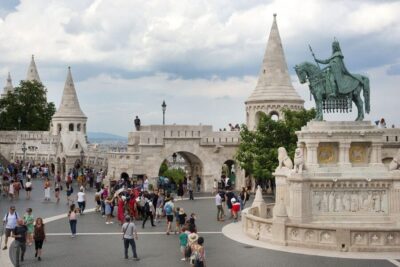
Once you’re moving, the tour keeps pulling you off autopilot. Instead of just pointing at famous facades, the guide highlights symbolic architectural details and design elements that connect to Hungarian identity and humor. You may also spot public artworks and urban art integrated into the district’s more historic visuals, which helps explain how the Castle District remains a living place rather than a museum set.
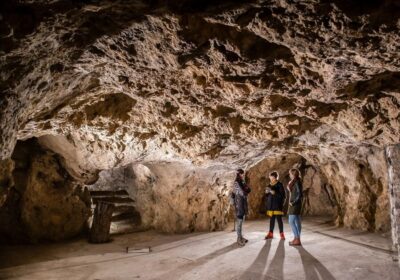
The tour also brings in the underground story, including the cave and labyrinth system beneath Buda Castle. You are not going underground on this walk, but you’ll learn how those spaces were used for defense, shelter, and survival in dangerous periods. You’ll get the story through viewpoints and guide-led context, so you can understand why the underground mattered even if you never step into it.
Another fun angle is the mineral-water element. The tour includes tales connected to caves and mineral water, and those stories help you picture daily survival needs. In other words, you’re not only learning who ruled, you’re learning how people tried to live through what the hill offered and what it threatened.
Medieval Royals to Ottoman Rule to the Habsburg Era
Castle Hill isn’t just old. It’s layered, and each layer influenced how the district looked and how it felt to live there. The route is designed to connect major periods, including medieval royal Budapest, Ottoman rule, and the long Habsburg era.
What makes this useful is the way the guide ties history to structure. You don’t just hear dates. You learn how the district’s layout reflects defense needs, political symbolism, and the logistics of power. When you understand that, you start seeing why courtyards and streets are positioned the way they are.
If you like history that actually explains the city in your hands, this is the kind of tour that helps you connect buildings to everyday reality. A castle district can be hard to interpret because it’s big and spread out. Here, the guide turns it into a sequence of decisions people had to make, century after century.
Jewish, German, and Hungarian Everyday Life, With Care Where It Counts
One of the strongest parts of this tour is how it treats social and cultural history, especially Jewish heritage. The guide discusses the role of Jewish, German, and Hungarian communities in everyday life on Castle Hill, and it does so with historical context and sensitivity.
That matters because Jewish history in Europe is often taught in fragments or reduced to a single tragedy. Here, you’re given a broader sense of coexistence, community presence, change over time, and loss. The goal is understanding how people shared space and how power shifts affected daily life.
I also like that this isn’t framed like a scare-the-tourist ghost story. It stays grounded in how communities actually fit into the district, which helps you see Castle Hill as something people lived in, argued about, adapted to, and mourned.
Still to cross in Budapest
- Budapest: City Highlights Sightseeing Cruise★ 4.6 · 43,981 reviews
- Budapest: Unlimited Prosecco, Beer and Aperol Spritz Cruise★ 4.8 · 37,304 reviews
- Budapest: Széchenyi Spa Day Ticket with Optional Upgrades★ 4.3 · 23,911 reviews
World War II Destruction and Rebuilding, and Why Today Looks the Way It Does
Budapest’s Castle District carries the evidence of destruction and later rebuilding. This walk explains how World War II damage changed the meaning of historic spaces and why postwar reconstruction did not simply restore the past.
You’ll hear about the contrast between original heritage and reconstructed history. That contrast is exactly what you notice when you compare Castle Hill’s grand surfaces to the idea of how war reshapes towns. The guide also talks about later political decisions that influenced what visitors see now.
In practical terms, you’ll leave with a clearer answer to a question many people have: Why do some parts feel authentic while others feel like careful reenactment? Even if you don’t know every architectural detail, you’ll understand the logic behind what you’re looking at.
Staying Above Ground, While Still Learning the Underground Story
If you’re expecting an underground adventure, this tour will recalibrate you. The walk stays above ground. Underground areas are introduced through stories and viewpoints only.
That approach works well for most people because it keeps the experience focused and physically manageable. You still get the key concepts about defense and survival in the cave and labyrinth system, without turning the tour into a spelunking workout.
It’s also a good reminder that sometimes the most important spaces in a city are not the ones you physically enter. The guide helps you understand why those underground areas mattered, so they become part of your mental map of Castle Hill.
Royal Part Finale, Questions, and Practical Tips for After the Tour
The walk concludes in the Royal Part of the Castle District, where you get time for questions and discussion. This is where you can ask the stuff that matters for your next hours in Budapest, like what to see next, what to skip, and how to keep your schedule realistic on the hill.
You also get practical local tips to continue exploring independently. That’s one reason I like tours like this, especially if you prefer small, focused planning instead of wandering into expensive dead ends.
If you’re the type who likes taking a second pass at a neighborhood after you understand its structure, you’ll probably want to come back to Castle Hill after the tour with fresh eyes. The guide’s framing gives you a set of questions to look for as you walk on your own.
Value and Timing: A Short Walk That Packs Real Context
The listed price is $1.18 per person, which is an unusually low figure for a licensed 2-hour walking tour in a World Heritage setting. Regardless of where you fall on the “is this too good to be true” scale, the structure explains the value: you’re paying for a licensed local guide plus continuous historical and cultural commentary during a carefully planned route.
Duration matters here. You’re out for about 2 hours, and the walking distance is about 1.5 miles. That makes it a strong fit for a day with other plans, while still giving the guide enough time to connect periods and themes instead of rushing through highlights.
English language support is also a big part of the value. You’re not relying on app summaries or reading panels you may not fully understand on a windy hill. The guide provides the meaning as you go, and you can ask follow-up questions at the end.
Finally, the group experience tends to be energetic and story-driven. Some participants have even noted moments like helpful photos taken during the walk, and that kind of human touch can make the tour feel more personal, not robotic.
Who This Tour Suits Best in Budapest
This tour suits you best if you want more than monuments. You’ll enjoy it if you like learning how cities work, why places are arranged the way they are, and how different communities shaped daily life on Castle Hill.
It’s also a good choice if you care about respectful storytelling. The handling of Jewish heritage is described with sensitivity and context, and the tour aims at understanding rather than spectacle.
You may want to skip it if you have mobility impairments, use a wheelchair, or rely on a stroller or pram that can handle uneven uphill terrain. The route starts with a 7 to 8 minute uphill climb and includes steps, and the tour stays above ground. People over 95 also may find it unsuitable based on the physical demands described.
Should You Book This Buda Castle District Walk?
If you want the fastest way to understand Castle Hill beyond surface sightseeing, I’d book it. The tour takes a compact 2-hour format and turns it into a guided explanation of how power, memory, and everyday life shaped the Buda Castle District.
Book it if you like:
- A story-forward guide who connects architecture to historical function
- A careful approach to Jewish history and community memory
- A route that helps you interpret courtyards, public art, and hill streets
Skip it if:
- Uphill steps are a deal-breaker for you
- You need a wheelchair-friendly or pram-friendly route
- You want underground access rather than viewpoint storytelling
If you’re in good walking shape and you want meaning with your views, this is one of the more practical ways to get real understanding of Budapest’s Castle Hill.
FAQ
How long is the Budapest Buda Castle District walking tour?
It lasts 2 hours.
Where do I meet the guide?
Meet at Batthyány tér on the Buda side (1011 Budapest), by the M2 (red line) metro exit at the foot of Castle Hill. The guide is in a small square near St. Anna Baroque Church and holds a small royal-blue flag.
Is the tour mostly walking or does it include long stops?
It is a walking tour across the UNESCO-listed Buda Castle District, with historical and cultural commentary throughout and time for questions at the end.
How much walking and climbing should I expect?
The route is about 1.5 miles. It includes a 7 to 8 minute uphill walk at the start, with about two sets of 40 steps.
Does the tour go underground?
No. The tour stays above ground. Underground caves and the labyrinth system are introduced through stories and viewpoints only.
What language is the tour in?
The tour is conducted in English.
What should I bring?
Bring comfortable shoes and dress for the weather.
What weather conditions does it run in?
The tour runs in most weather conditions, so plan clothing for wind or rain.
Is the tour fully refundable if plans change?
You can cancel up to 24 hours in advance for a full refund.
The newest crossings added in Budapest






Castle District Walks & Tickets, compared.

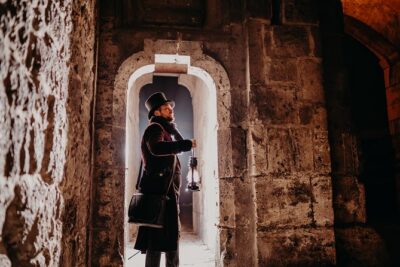
Buda Castle District Vampires and Myths Night Tour
Read our review →
Buda Castle District Dark History, Legends and Vampire Night Tour
Read our review →
Buda Castle District Walking Tour with a Historian
Read our review →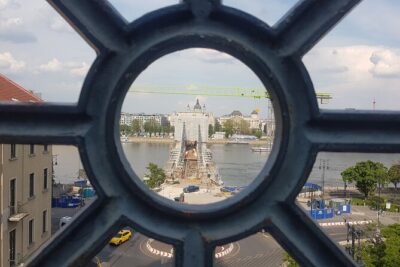

Walking tour in the Buda Castle incl. Fisherman’s Bastion
Read our review →Browse the lists this tour appears in