
Reviewed · CYCLING TOURS
Budapest ❤️Winter Bike Tour with Coffee Stop❤️
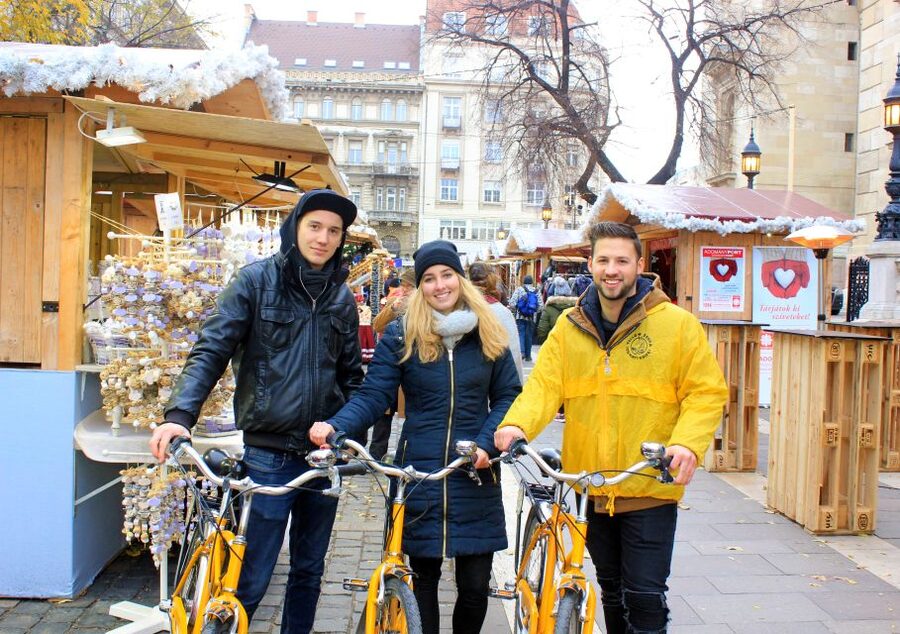
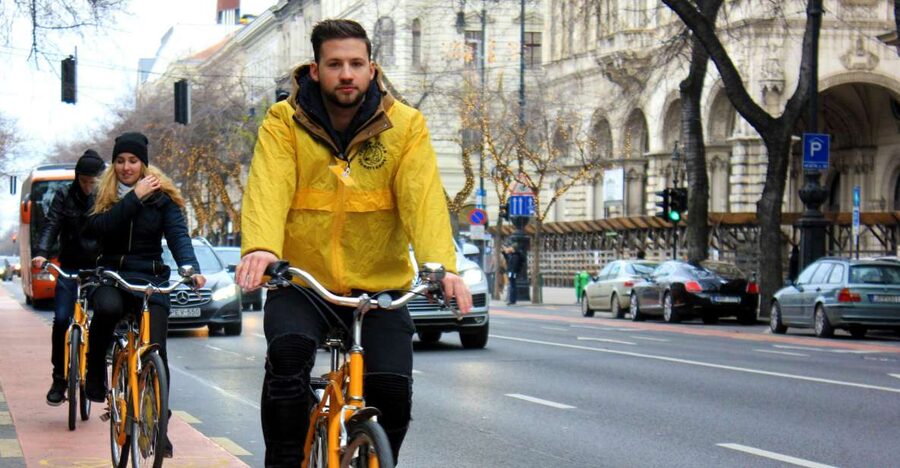
Budapest looks different when you pedal in winter. This easygoing, small-group ride pairs major sights with a warm coffee-and-pastry break. You also get expert context as the route rolls along bike-friendly stretches.
I love how this tour builds momentum without turning into a grind, with up to two hours of steady riding and plenty of photo stops. I also like that you cover big visual hits in a short window, including St. Stephen’s Basilica, Parliament, and sweeping views toward Buda Castle from the riverbank.
The main drawback is the cold. The tour runs in all weather, and you need the fitness and bike comfort to keep moving for long enough that frost stays in the air, not on your plans.
In This Review
- Key points I’d plan around
- Budapest in winter: why biking beats standing in line
- Yellow Zebra meeting point and how the tour starts right
- Andrassy Boulevard to St. Stephen’s Basilica, the city’s postcard scale
- Liberty Square, the last Soviet relic, and how political history shows in streets
- Parliament building and riverbank views of Buda Castle District
- The coffee-and-pastry stop: warm fuel at the right time
- Heroes’ Square and City Park: big monuments without the museum ticket line
- Central Market Hall by bike: Art Nouveau inside the schedule
- Group size, guide style, and languages that actually help
- How hard is winter biking here, really
- Price and value: what $93 gets you in Budapest
- Weather changes, route swaps, and why winter planning needs flexibility
- Should you book this Budapest winter bike tour with coffee?
- FAQ
- How long is the Budapest winter bike tour?
- What’s included in the price?
- What sights will I see?
- Is the tour suitable if I can only bike a little?
- Do I need to know how to ride a bike?
- Does the tour run in winter weather?
- Where do I meet the tour?
- Are entry fees to attractions included?
- Are children allowed?
Key points I’d plan around
- Coffee and pastry are included, so winter calories are handled early, not as an afterthought.
- You get a guided route that links buildings to the bigger story, from Soviet-era remnants to today’s city layout.
- Expect major Budapest landmarks in a compact 2.5 hours, with lots of time for stops and questions.
- The ride is designed to be easy and continuous for up to two hours, so it rewards basic bike confidence.
- Small groups, generally 15 participants or fewer, keep the vibe personal and interactive.
Budapest in winter: why biking beats standing in line
Winter Budapest is all about contrast. You get clear sightlines, crisper air, and that feeling that the city is quieter but still very much alive. A bike tour fits perfectly because you’re not stuck waiting for buses or walking from one far-apart spot to the next.
What makes this one a smart choice is the balance between movement and breaks. You will keep pedaling long enough to feel like you covered ground, but the route includes major viewpoints and photo moments rather than treating stops like a punishment. And because the tour includes a warm cafe stop with traditional pastry, you’re not just surviving the cold, you’re fueling it.
The other practical win is that Budapest’s center can be flat on the Pest side, which matters when roads are slick and your legs are already cold. In this tour setup, the pacing is meant to keep you comfortable while still doing a proper sight tour.
Yellow Zebra meeting point and how the tour starts right
The meeting point is at Yellow Zebra Bike Tours, just about a minute from Vaci utca. That’s useful because you can orient yourself quickly, and you are already near a major central corridor when the tour begins.
From there, the early part of the ride is focused on getting you oriented. You head toward the area around the Opera House and then roll along Andrassy Boulevard, one of the city’s most famous avenues. This early segment is not just “getting places.” It helps you learn how Budapest’s grand avenues and pedestrian-heavy sightseeing areas connect to the practical reality of getting around by bike.
You’ll also get your bearings in daylight hours, which is a big deal in winter. A 2.5-hour tour can slide by fast if you start late or keep stopping to figure out directions. Starting near Vaci utca helps keep the pace smooth.
More gilded coffeehouse mornings:
- Grand Segway Tour of Budapest – Private Tour with Coffee Stop
★ 5.0 · 163 reviews - Budapest: City Bike Tour with Coffee Stop
★ 5.0 · 37 reviews - Castle District tour with Matthias Church Ticket & Cake & Coffee
★ 5.0 · 31 reviews
Andrassy Boulevard to St. Stephen’s Basilica, the city’s postcard scale
As you ride along Andrassy Boulevard, you’re watching Budapest from street level, not from a viewpoint bus window. That matters because winter light makes building lines and facade details easier to see, even when you’re moving at a bike speed.
Then comes St. Stephen’s Basilica, a key stop because it anchors the tour’s “major landmarks” approach. This is the kind of place where the outside alone tells you how important the church is in the city’s visual identity, and your guide’s narration is what turns a big building into something you can actually place in history.
Practical tip: if it is very cold, don’t underestimate the amount of time you may spend with your hands out of pockets for photos. Bring gloves. If you forget, you’ll still be fine, but you’ll feel it.
Liberty Square, the last Soviet relic, and how political history shows in streets
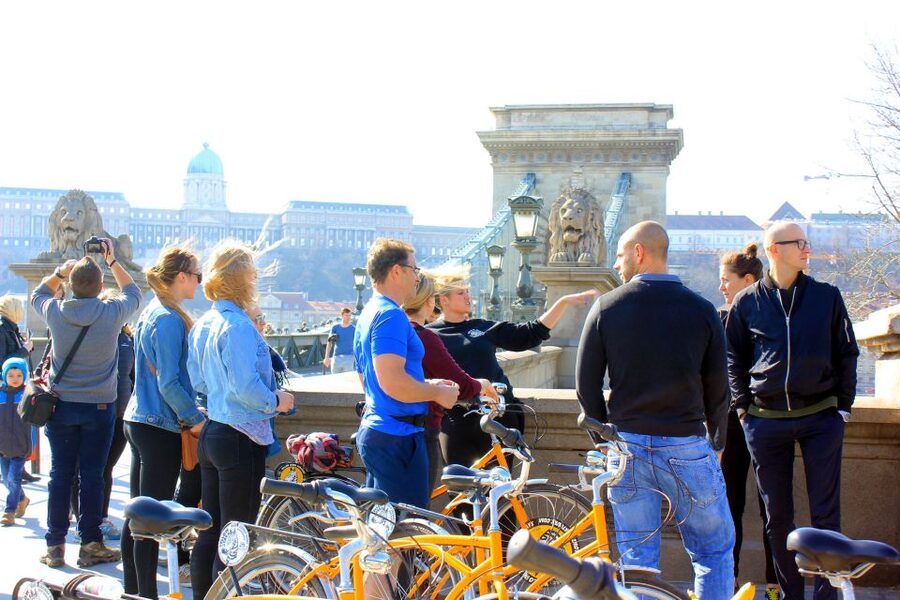
Next, you’ll move to Liberty Square, where the tour spotlights one of the city’s last Soviet relics. This is a big value-add because it’s easy to visit monuments as scenery. Here, you get a guided explanation that links what you see to what changed in Hungary’s political life.
This is one of the tour’s strengths: you’re not only collecting landmark names. You are learning what those landmarks meant and why they are positioned where they are. That makes the city feel less like a series of disconnected photos and more like a timeline.
And yes, this part is also useful for first-time visitors. If you only do museums, you might miss how political history shows up in everyday city space. A bike route helps you notice those connections as they pass by.
Parliament building and riverbank views of Buda Castle District
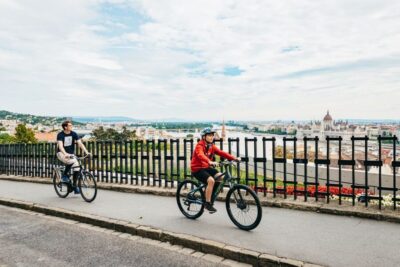
The tour then heads toward the Parliament building, one of Budapest’s most recognized silhouettes. From there, you get one of the most rewarding moments of the ride: stunning views of the Castle District from the riverbank.
This is where winter can be your friend. Cold air often means clearer visibility, so you can actually see the complex layering of rooftops and towers instead of only seeing vague shapes through haze. The Castle District view is framed by landmarks you’ll want to remember later, including Matthias Church, the Royal Palace, and Fisherman’s Bastion.
A guide’s job here is crucial. From street level, it can be hard to tell which building belongs to which era and why the district looks the way it does. Your guide helps you connect the names to the skyline. That turns a view into something you can interpret later when you return.
If you are the type who likes to plan future stops, this is the best payoff. You’ll see enough to decide what you want to revisit, whether it is churches, viewpoints, or the Palace area.
More flat spins along the embankments:
- Budapest: Grand Sightseeing Bike Tour★ 4.8 · 984 reviews
- Budapest Highlights Bike Tour★ 5.0 · 770 reviews
- Budapest: Guided City Discovery Bike Tour★ 4.7 · 702 reviews
The coffee-and-pastry stop: warm fuel at the right time
Included in the tour is a stop at a warm and cozy cafe, with coffee or tea plus a traditional Hungarian pastry. This is not a random snack stop. It’s timed well to break up the cold and reset your energy before the later riding.
I like the way this is structured because in winter, hunger can sneak up fast. Once you stop feeling “cold air cold” and start feeling “low fuel,” your whole mood changes. The pastry helps with that, and the warm drink helps you warm your core instead of just your hands.
If you have dietary needs, the tour data does not list options. So I suggest you plan to eat what is offered or bring a backup snack for peace of mind.
Heroes’ Square and City Park: big monuments without the museum ticket line
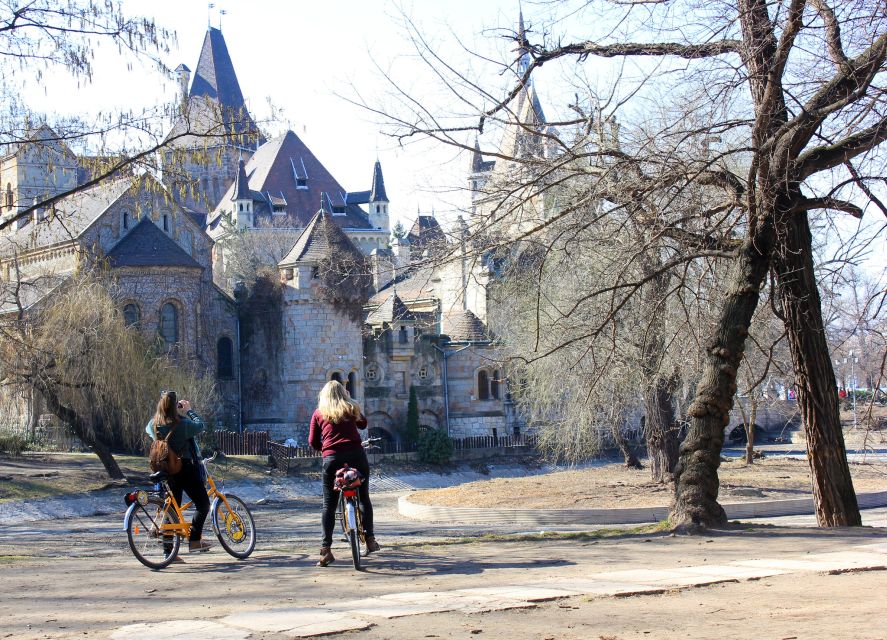
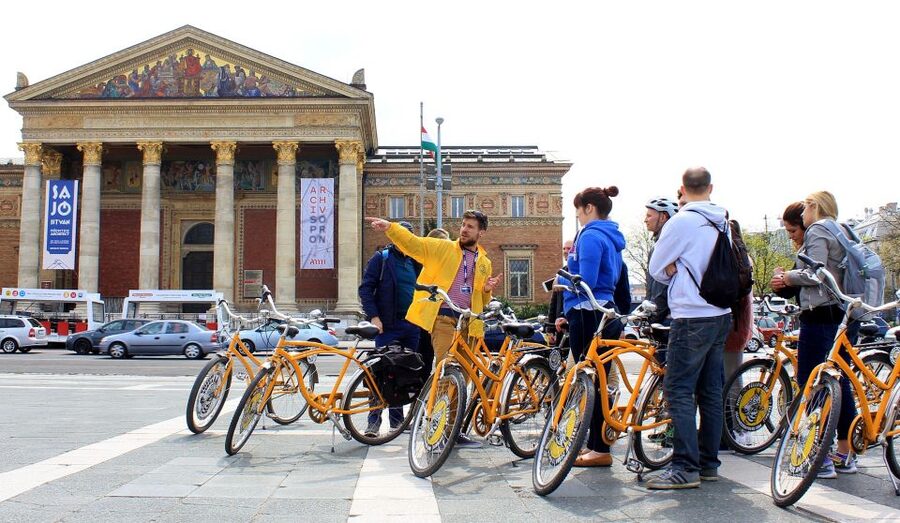
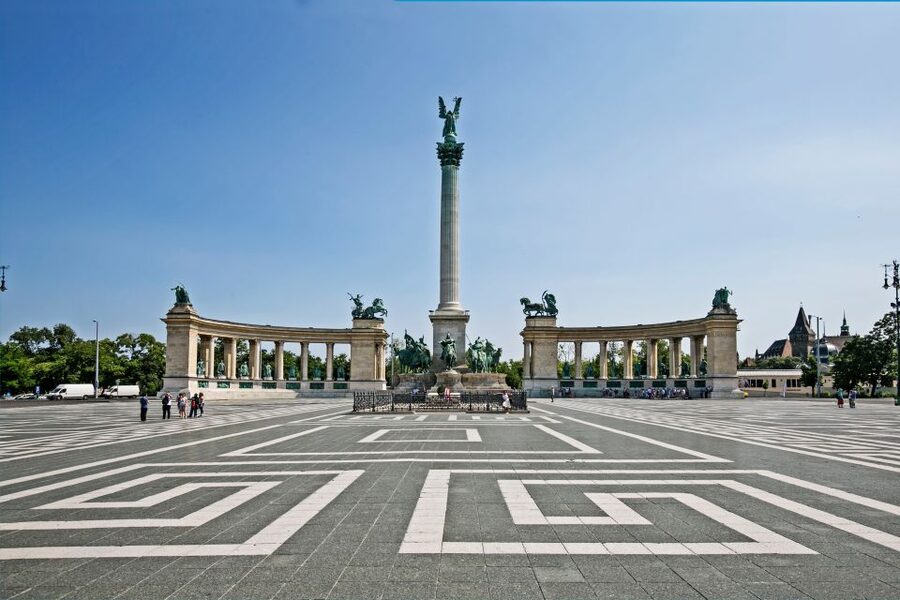
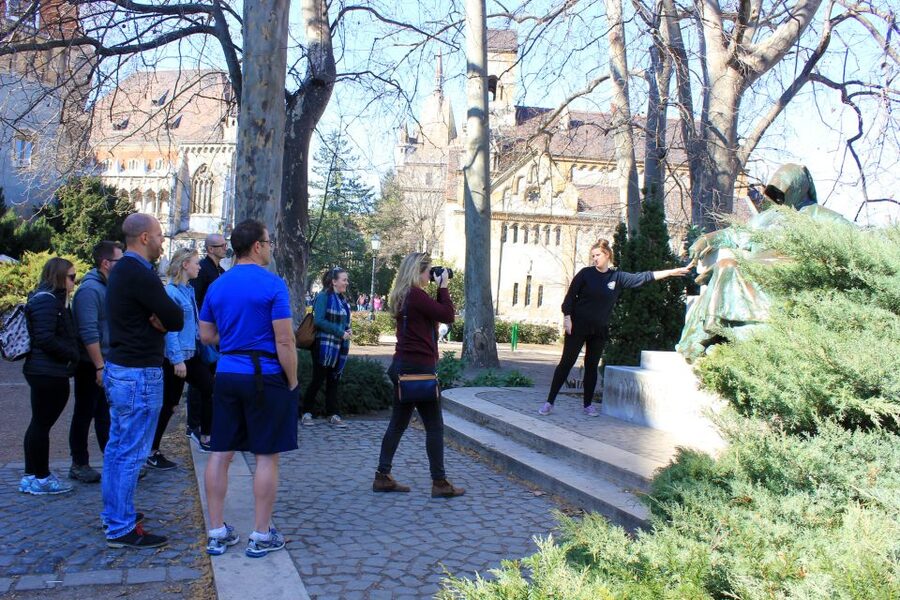
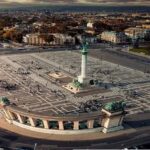
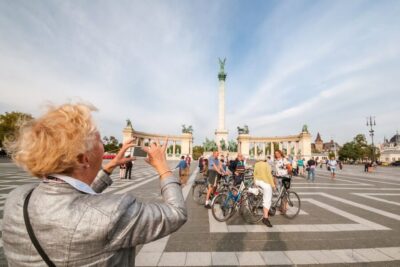
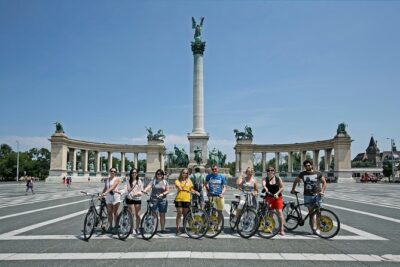
The highlights include Heroes’ Square and City Park, and those are excellent choices for a winter bike tour. They are huge, open-air spaces, and that matters when you want sightseeing that does not require timed entries or long indoor waits.
Heroes’ Square gives you a grand civic photo moment. City Park helps you see another side of Budapest, where the city feels more spacious and the monuments look different when viewed from a moving bike lane.
What I’d watch for here is winter pacing. Open squares can feel colder because you are exposed to wind. If you feel yourself getting “too cold too fast,” this is your signal to keep moving, not to linger with cold hands on the handlebars.
Central Market Hall by bike: Art Nouveau inside the schedule
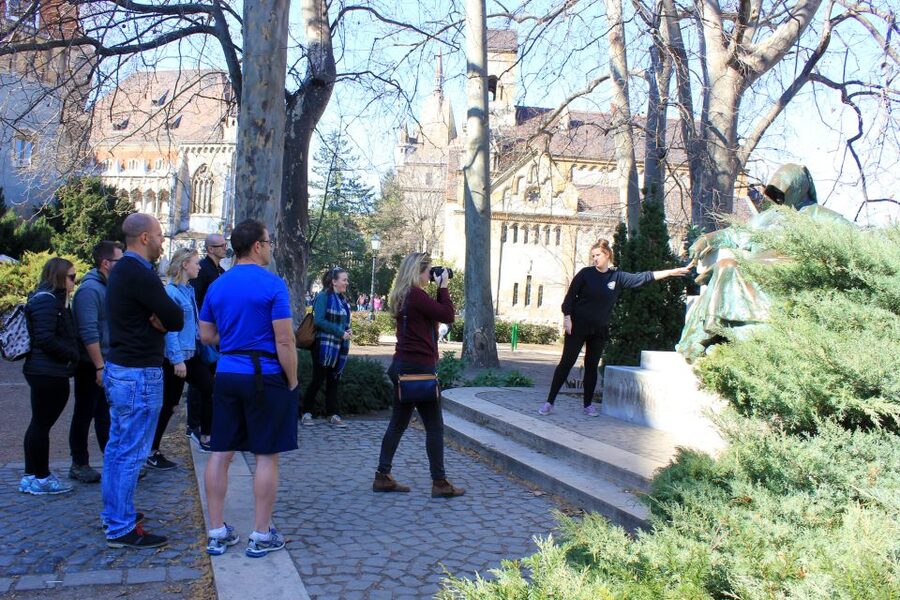
Later, the ride takes you to Central Market Hall, a major indoor market housed in an Art Nouveau building. This is a practical stop because it shifts you from winter outdoors to a covered space while still keeping the tour moving.
The market hall is a great place to wander even if you do not plan to buy anything. You get the sensory jolt of food stalls, local products, and that feeling of being inside a functioning part of the city rather than only photographing it from afar.
Important note: the tour data says entry fees to sights and museums are not included. For Central Market Hall, you’ll want to check how entry works on the day, because the tour includes the walk-through time but does not promise that every access cost is bundled.
Group size, guide style, and languages that actually help
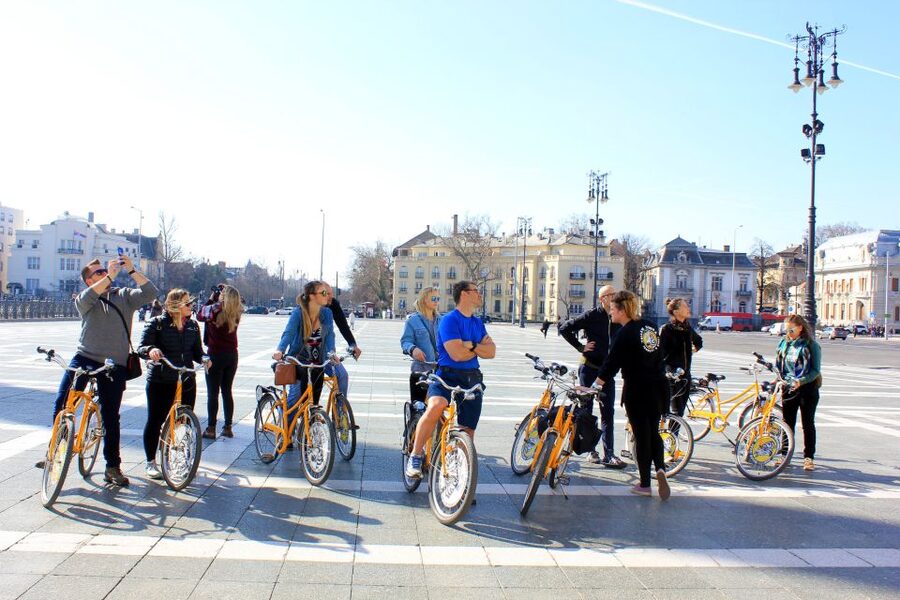
This tour works best when the guide connects the dots quickly. The guide is English-speaking, and languages listed include English, French, Arabic, German, and Russian. That’s a real quality-of-life feature if you want to understand more than just the postcard captions.
The tour also keeps things small, generally not more than 15 participants. That size matters in winter. It’s easier for the group to roll at a steady pace, and you are more likely to get personal attention when someone asks a question.
From past participants’ experience, guides like Sam, Becca, Georgi, Raymond, Hunor, Balint, and Katrina have been singled out for being kind, professional, and good at making the ride fun while explaining what you’re seeing. Even if you do not get the same guide, that naming pattern is a clue that this provider invests in storytelling, not only route delivery.
How hard is winter biking here, really
The tour is labeled easy and it is small-group. Still, it comes with clear requirements: you need to be fit enough for continuous biking for up to two hours, and you must know how to ride a bike.
That means this is not for brand-new riders who get wobbly at slow speed. It is also not a “sit and coast” style tour. You will pedal. If you’re comfortable commuting by bike in flat city conditions, you will likely be okay.
Winter makes the difference. Roads can be slick, and cold reduces grip and comfort. Because you’re riding for real, your choice of clothing matters:
- Wear warm clothing
- Bring hats and gloves if you run cold
- Choose comfortable layers so you can breathe without overheating
Also, the tour goes in all weather conditions. That is great for reliability, but it means you should dress as if you will be outside the whole time, because you will.
Price and value: what $93 gets you in Budapest
At $93 per person for about 2.5 hours, you’re paying for more than bike rental. The tour includes:
- An English-speaking guide
- Bike hire and an optional helmet
- A coffee or beverage stop with pastry included
What’s not included:
- Entry fees to sights and museums
- Transport to and from the meeting point
Here’s how I judge value for this kind of tour: you’re buying structure and context. Without a guide, you could bike around Budapest on your own, but you would likely spend time guessing which street viewpoints matter, where the best angles are, and what historical references connect the landmarks.
This tour bundles a lot of big names into a short ride window, and the included cafe stop adds real value in winter. If you were planning to rent a bike anyway and then grab coffee and a snack on top, the math gets even easier.
If you want to minimize extra spending, note that entry fees are not included. So if you plan to go inside anything afterward, budget that separately.
Weather changes, route swaps, and why winter planning needs flexibility
The provider may alter the route due to construction, city closures for events, festivals, and other bike access restrictions. That’s normal in a large city, and it can affect which exact segments you pass.
Also, refunds or exchanges are not given due to adverse weather. The tour still runs in all weather, so your best move is to show up dressed for winter reality rather than hoping for perfect conditions.
The tour reserve the right to change the plan, which can be frustrating if you have your heart set on a single photo spot. The tradeoff is that you still get a guided ride that reaches the main set of highlights even when access shifts.
Should you book this Budapest winter bike tour with coffee?
Book it if you want a first-day style orientation to central Budapest, especially if you like seeing landmarks in motion instead of only by walking. This fits well for people who know how to ride, can stay comfortable biking for up to two hours, and appreciate guided explanations that connect buildings to the city’s story.
Skip it if cold weather shuts you down quickly, if your bike skills are shaky, or if you’re planning to travel with children under 12. The tour data also says it is not recommended for children under 12 in winter, and participants need to be generally fit for continuous biking.
One more “yes” sign: if you hate spending your limited travel time hunting for coffee while you’re already cold and tired, the included cafe stop is a smart peace-of-mind feature.
FAQ
How long is the Budapest winter bike tour?
The tour lasts 2.5 hours.
What’s included in the price?
The price includes an English-speaking guide, bike hire (and an optional helmet), plus a coffee or beverage and pastry stop.
What sights will I see?
You’ll ride past or visit major spots such as St. Stephen’s Basilica, the Parliament area, Heroes’ Square, City Park, and Central Market Hall, plus you’ll get Castle District views from the riverbank. The tour also includes a stop at Liberty Square to look at a Soviet relic.
Is the tour suitable if I can only bike a little?
Participants need to be able to bike continuously for up to two hours, so it works best if you are comfortable riding for that length in cool weather.
Do I need to know how to ride a bike?
Yes. The tour states that participants must already know how to ride a bike.
Does the tour run in winter weather?
Yes, the tour goes in all weather conditions. You should dress appropriately for winter.
Where do I meet the tour?
Meet at Yellow Zebra Bike Tours, located about 1 minute from Vaci utca.
Are entry fees to attractions included?
No. Entry fees to sights and museums are not included.
Are children allowed?
It is not recommended for children under 12 due to winter conditions, and it also lists children under 2 as not suitable.
The newest crossings added in Budapest

Cycling Tours, compared.
Browse the lists this tour appears in