Reviewed · PRIVATE
Art Nouveau Treasures of Budapest – Exclusive Private Tour
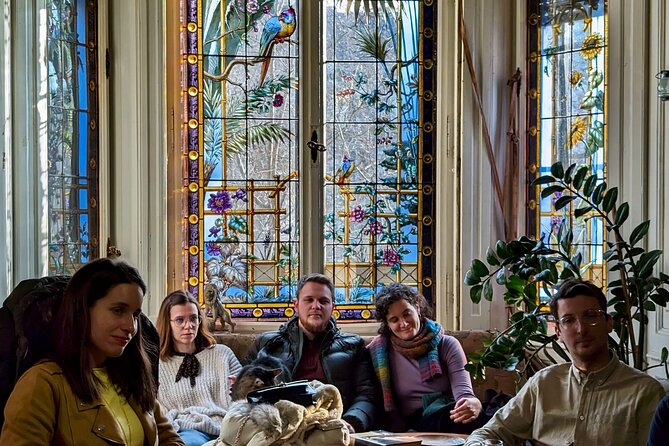
Art Nouveau feels like a citywide secret in Budapest. I love how this private walk connects Secession style to the real people and details behind it, guided by an art historian and steered by Miklós. You also get access to a standout finish: an incredible Miksa Róth stained-glass window in a private apartment.
Second, I like the smart mix of famous exteriors and places you usually do not get to linger in. You pause at iconic spots like St. Gellért Thermal Bath, then move to the Postal Savings Bank on Hold utca for the kind of tile-and-folk-motif design that makes Secession click.
The one thing to watch is pacing and admissions. It runs about 2.5 to 3 hours with short stops, and Central Market Hall admission is not included, so plan for that.
In This Review
- Quick reasons to book this Art Nouveau Budapest private tour
- Art Nouveau Budapest, made practical on a private route
- Central Market Hall start, then the Miksa Róth stained glass finale
- Bridges and Gellért Hill, then St. Gellért Thermal Bath in Secession style
- The Postal Savings Bank on Hold utca and Ödon Lechner’s 1901 tilework
- Gutenberg Square in the 8th district, plus glasswork by Miksa
- How the private format and public-transport mix works in real life
- Price and value: $261.67 per group for up to 5
- Who this tour is best for, and who might want a different plan
- Should you book Art Nouveau Treasures of Budapest?
- FAQ
- How long is the Art Nouveau Budapest private tour?
- How big is the group?
- Is pickup available?
- Do I need a mobile ticket?
- Are admissions included?
- Is food and drinks included?
- Will I travel by private transportation?
- Are service animals allowed?
Quick reasons to book this Art Nouveau Budapest private tour
- Expert art historian guidance that explains what you are seeing, not just what the building is called
- Miksa Róth stained glass viewed up close in a century-old private apartment setting
- St. Gellért Thermal Bath time built into the route, with a clear Secession focus
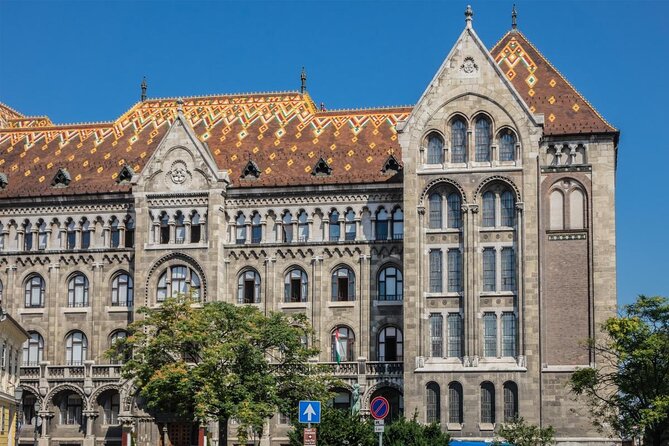
- Ödon Lechner’s 1901 Postal Savings Bank and its colorful tilework and folk motifs
- Two bridge moments that help you connect architecture to the city’s hills and Danube views
- Private group of up to 5, with pickup offered and start time customizable on request
Art Nouveau Budapest, made practical on a private route
If you love Art Nouveau but feel stuck staring at facades, this is the antidote. Budapest’s Secession style is not just “pretty buildings.” It is design that uses symbolism, pattern, and local craft to tell you how people wanted modern life to look around 1900.
This tour is private, for up to 5 people. That matters. With a small group, you can pause when something catches your eye, ask follow-up questions, and actually notice details like ornament placement, color logic, and how interior spaces echo the exterior look.
What really works is that you do not bounce randomly around the city. You move through a tight set of stops that share a theme, then you get your eyes trained on what to look for. On my tour, Miklós brought a clear, enthusiastic way of explaining things, and the art historian added the “why” behind the design choices.
Central Market Hall start, then the Miksa Róth stained glass finale
You start at Central Market Hall (1093 Budapest). The tour includes about 20 minutes there, with an admission ticket not included. In other words, you can treat this as a quick orientation stop, then keep your budget ready if you decide to enter.
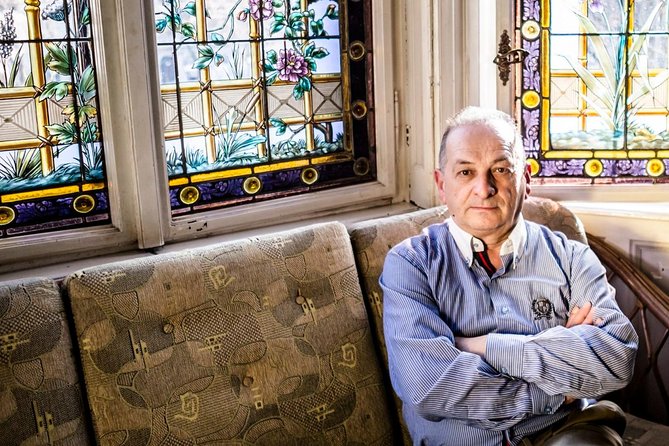
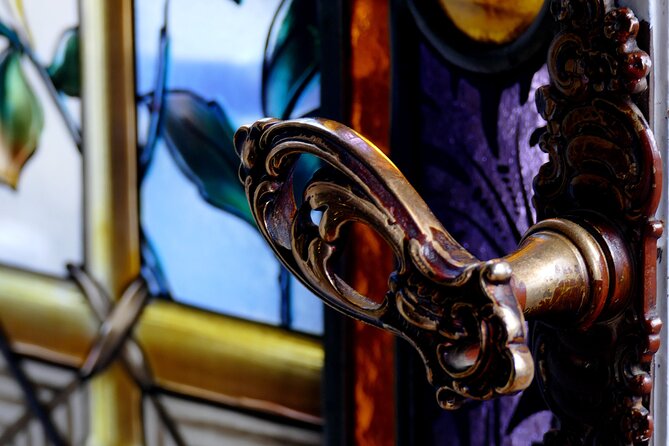
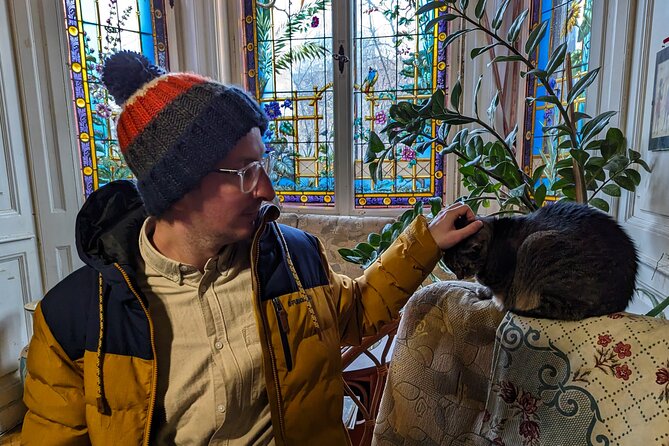
The bigger hook is where the tour ends. You finish in a private apartment at Rákóczi tér, a century-old setting with an exclusive chance to admire a real hidden treasure: a stained-glass window by Miksa Róth. This is the kind of access you cannot fake with photos. The scale, the lead work, and the way light moves through the glass are hard to understand until you are standing close.
I love that the finale changes the tone of the day. Morning tours can feel like a checklist. Ending at a private residence flips the script. You are not just outside viewing famous architecture. You see how Art Nouveau artistry lived inside everyday spaces, even when the city’s public face steals most of the attention.
Practical tip: this is a “show up and look” style of ending. Wear shoes you trust, because you will likely spend time focusing rather than rushing. If your legs get sore, tell the guide early. Small groups make it easier to adjust on the fly.
Still to cross in Budapest
- Budapest: City Highlights Sightseeing Cruise
★ 4.6 · 43,981 reviews - Budapest: Unlimited Prosecco, Beer and Aperol Spritz Cruise
★ 4.8 · 37,304 reviews - Budapest: Széchenyi Spa Day Ticket with Optional Upgrades
★ 4.3 · 23,911 reviews
Bridges and Gellért Hill, then St. Gellért Thermal Bath in Secession style
After Central Market Hall, you walk across one of Budapest’s beautiful bridges to reach Gellért Hill. That short bridge segment is more than a scenic break. You get a natural way to understand why Budapest looks the way it does, with architecture sitting against hills and across the Danube.
Next comes St. Gellért Thermal Bath and Swimming Pool. You spend about 20 minutes here, and the admission ticket is listed as free. St. Gellért is also an iconic bath and hotel, and the tour frames it as a peace of art in the Secessionist style. Even if you are not a “bath person,” it is a great stop because it shows how this design language appears in public leisure spaces, not just offices or apartment facades.
One caution: the tour gives you time to see and understand, but it is not described as a long soak experience. Plan for observing and learning more than for an extended swimming or soaking session.
If you are thinking about photos, aim for a quick burst rather than chasing every angle. The guide’s explanations will tell you where to look, and those details tend to be more useful than getting stuck with your camera in hand.
The Postal Savings Bank on Hold utca and Ödon Lechner’s 1901 tilework
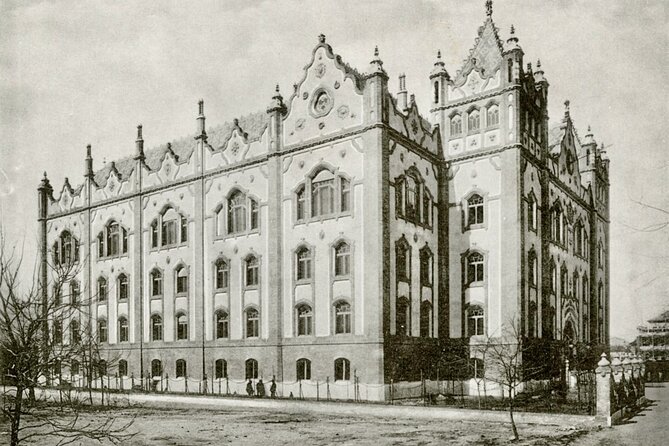
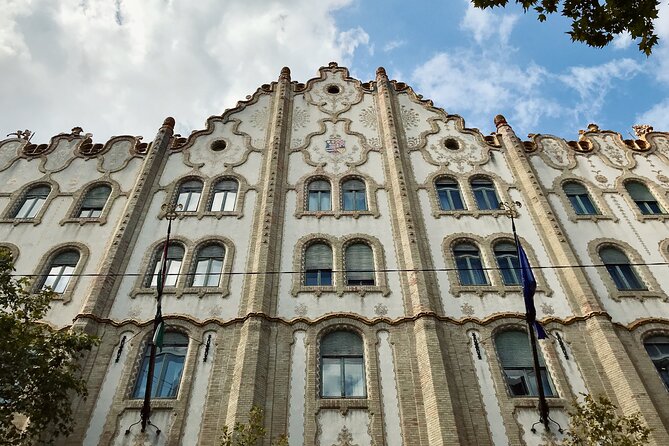
This is where Secession stops being abstract and starts getting hands-on. You visit the Postal Savings Bank on Hold utca, described as one of the city’s greatest examples of Secession artwork. It was designed by famous secessionist artist Ödon Lechner in 1901.
You get about 20 minutes here, and the program gives you additional time again under the same building area, so you are not just doing a single quick glance. That repeated time is important. Tile-and-folk motifs can be easy to miss if you skim. With a bit of time, you can start seeing the “rules” of the decoration, how patterns repeat, and how folk-inspired elements are used to make the building feel human and local.
I like that this stop is free of admission cost on the schedule. That means you can spend your energy on looking, not worrying about extra entry fees. It is also a solid choice if you want Art Nouveau that feels grounded in everyday materials. The exterior tiles are not just decoration. They are part of how the whole structure tells a story.
What to focus on during your time here:
- Color choices and how they guide your eye
- Where the motifs sit, at entrances, edges, and transitions
- How the building’s ornament supports the overall massing, instead of fighting it
Gutenberg Square in the 8th district, plus glasswork by Miksa
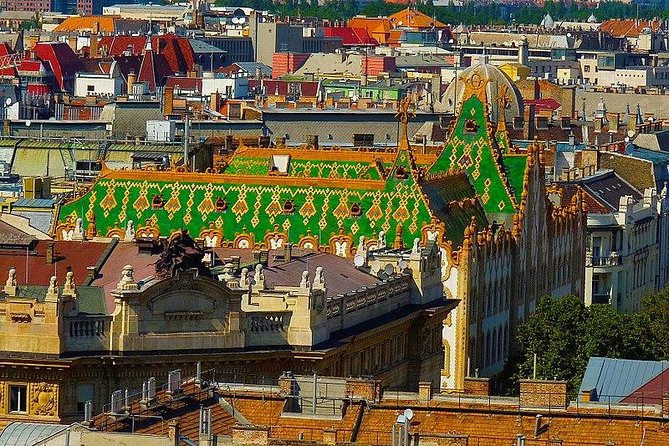
The last named stop is Gutenberg Square, in Budapest’s 8th district, in the Palace area. Here you see an art deco historic building, and the schedule highlights a magnificent lead-glass staircase by Miksa.
Even though this part is labeled art deco, it still fits the tour’s overall theme. You are seeing how glass, metalwork, and design craftsmanship carry through different fin de siècle and early modern styles. The staircase detail is the kind of feature that makes a quick stop feel worthwhile.
This is also a good moment for slower looking. You have reached the end of the main route, so you can take in the materials and geometry without feeling like you need to race to the next stop.
If your group loves architectural interiors, this is a nice capstone. The tour is built to go beyond outside-only views, and the lead-glass staircase is the kind of element that rewards lingering.
Back across the water in Budapest:
- Budapest: Nighttime or Daytime Sightseeing Cruise★ 4.2 · 21,062 reviews
- Budapest: By Night Sightseeing Cruise with Welcome Drink★ 4.3 · 15,533 reviews
- Budapest: St. Stephen’s Basilica Entry with Options★ 4.6 · 12,322 reviews
How the private format and public-transport mix works in real life
This tour is designed to be walked, with the use of public transportation, and it does not include private transportation. In practice, that means your guide is thinking like a local: you move efficiently between sites without paying for a car.
Pickup is offered. You can meet the guide at your hotel or at a central meeting point that you agree on. You also receive a mobile ticket.
Start time is customizable on request. This is a real value point in Budapest, where lighting and crowds can change your experience. If you can pick a time that avoids peak crush, you will enjoy the buildings more and spend more of your brain power noticing design.
The tour also runs near public transportation, which helps if you need to adjust your day before you meet your guide. Service animals are allowed, which is helpful information if that matters to your group.
Pacing wise, the route is made of short, focused segments. Total time is about 2 hours 30 minutes to 3 hours. That length is usually ideal for a style-focused tour. Long enough to learn, short enough that you are not stuck walking for half a day.
Price and value: $261.67 per group for up to 5
At $261.67 per group (up to 5), you should think of this as a specialist guide experience, not a budget “see the sights” walk.
Here is the practical math: if you are one person, it is expensive per head. If you have 3 to 5 people sharing, it becomes much more reasonable. For small groups of friends or a family unit who likes design details, the private format and art historian time can feel like a bargain compared with paying for multiple separate tickets to other tours.
The best value angle is the combination of:
- A guided Art Nouveau and Secession-focused route
- Time at major architecture sites
- And the finale in a private apartment featuring a Miksa Róth stained-glass window
That stained-glass access alone is the kind of thing you cannot usually buy on demand. It is rare, and it is the exact reason people book this style of tour.
Also, many of the scheduled admissions are listed as free. The schedule flags Central Market Hall admission ticket not included, while other stops are free on the plan. That helps keep your day from turning into an unexpected expense spreadsheet.
Who this tour is best for, and who might want a different plan
This fits you if:
- You love Art Nouveau or Secession style and want help noticing the design logic
- You prefer small-group, guided attention rather than wandering
- You want at least one truly special, non-public-feeling viewing moment, like the Miksa Róth stained glass in a private apartment
It might not fit you as well if:
- You want a long, slow museum-style tour with plenty of built-in sitting time
- You are hoping for a full meal included, because food and drinks are not included unless specified
- You only care about the most famous exterior shots and not about explained details
If you are the type who likes architecture, this tour is a strong match. If you are also curious about how people lived with design beyond showpiece monuments, you will likely enjoy the finale setting.
Should you book Art Nouveau Treasures of Budapest?
I would book it if your goal is to understand Art Nouveau and Secession in Budapest at street level. The tour’s structure makes sense: bridges and city views, then a sequence of landmark design stops, ending with real Miksa Róth stained glass in a private apartment.
For best results, go with comfortable shoes and bring a bit of curiosity. You will get more out of it if you look for patterns, not just pictures. If you have a group of up to 5, this also becomes a much better value than paying a higher per-person cost for solo tours.
If Central Market Hall matters to you, plan for that admission since it is not included in the schedule. Other stops are free on the plan, so your biggest extra cost is likely just that opening moment.
FAQ
How long is the Art Nouveau Budapest private tour?
It runs about 2 hours 30 minutes to 3 hours.
How big is the group?
It is a private tour/activity, and your group is the only group participating. The price is listed for up to 5 people.
Is pickup available?
Yes. Pickup is offered, and you can meet the guide at your hotel or at a central point you agree on.
Do I need a mobile ticket?
Yes, a mobile ticket is offered.
Are admissions included?
Central Market Hall admission is not included, while the St. Gellért Thermal Bath and Swimming Pool stop is listed as free. The other listed stops are also shown as free on the tour schedule.
Is food and drinks included?
No. Food and drinks are not included unless specified.
Will I travel by private transportation?
No private transportation is included. The tour is designed to be conducted on foot with public transportation.
Are service animals allowed?
Yes, service animals are allowed.
The newest crossings added in Budapest






Private, compared.

Private Budapest TukTuk Tour: Custom Route, Hotel Pickup
Read our review →
Budapest Essentials Private Tour Highlights and Hidden Gems
Read our review →
Budapest Private Luxury Sightseeing Tour with Guide and Transport
Read our review →
Private Budapest City tour with Classic Russian Jeep or G-Wagon!
Read our review →
Budapest Private Full Day City Sightseeing Tour Walking or by Car
Read our review →