
Reviewed · CASTLE DISTRICT WALKS & TICKETS
A Self-Guided Audio Tour of Budapest’s Castle District
Stories wait around every corner here. This self-guided GPS-based audio walk through Budapest’s Castle District turns famous landmarks into plot points, and it has a clear upside: it narrates quirky threads like the House of Houdini and the Hospital in the Rock while guiding you stop to stop. I especially like the offline audio and map support (so you are not hunting for signal), and I like how the route mixes architecture, big viewpoints, and human stories in one loop. One catch: you must bring your own smartphone and headphones, and you will be walking.
Budapest’s oldest hill neighborhood is made for wandering, and the timing works out nicely. Expect about 1 hour 20 minutes to 1 hour 40 minutes on foot, and you move at your pace instead of matching a group schedule. You start at the Museum of Music History and end at the Hungarian National Gallery in the Royal Palace area.
If you want history in story form, plus a few laughs and surprises, this is a strong fit. If you prefer a strict walking pace with constant in-person explanation, you might miss having a guide to answer questions on the spot.
In This Review
- Key highlights worth your attention
- Why the Castle District Works So Well on Audio
- Getting Started at the Museum of Music History (Táncsics Mihály u. 7)
- GPS audio that actually follows you (and why that matters)
- Walking the Castle District stop by stop, from Jewish chapel to the National Gallery
- Price and value: is $14.99 fair for this Castle walk?
- Who this audio tour is best for (and who should pass)
- Practical timing tips for a better Castle District experience
- Should you book this Budapest Castle District audio tour?
- FAQ
- How much does the Budapest Castle District self-guided audio tour cost?
- How long is the walking audio tour?
- Where do I start and where does the tour end?
- Do I need an internet connection while walking?
- What do I need to bring with me?
- What is the cancellation policy?
Key highlights worth your attention

- GPS that plays as you arrive, so the walk feels like a treasure hunt without the stress of guessing
- Offline maps and audio, which matters a lot on hilly old streets
- WWII cave hospital storytelling, centered on the Hospital in the Rock under Buda Castle
- Big “lookout” moments, especially the Fisherman’s Bastion panorama over the Danube
- Iconic Castle District architecture, including Matthias Church and the Royal Palace gallery finish
- One producer voice, with producer Vince Bur, part-time guide and Budapest native, leading the narration
Why the Castle District Works So Well on Audio

The Castle District can feel like a postcard that got tangled in time. Even without entering every building, you get layers of power, faith, and survival packed into a compact area. That is why an audio route works so well here. You look at what is in front of you, then the story explains why it matters.
This tour is built like an on-foot audiobook: you do not just read plaques, you get a running thread of tales. You will hear the kind of details that make landmarks stick in your memory, including the darker sides of the last century and the Castle legends people still pass around. The route also keeps your eyes moving, since it pairs architectural highlights with viewpoint stops and small courtyards.
The other practical win is flexibility. You can pause and restart as you wish because it is self-guided with GPS playback. That matters in a place where crowds can swell quickly near major churches and terraces.
Getting Started at the Museum of Music History (Táncsics Mihály u. 7)
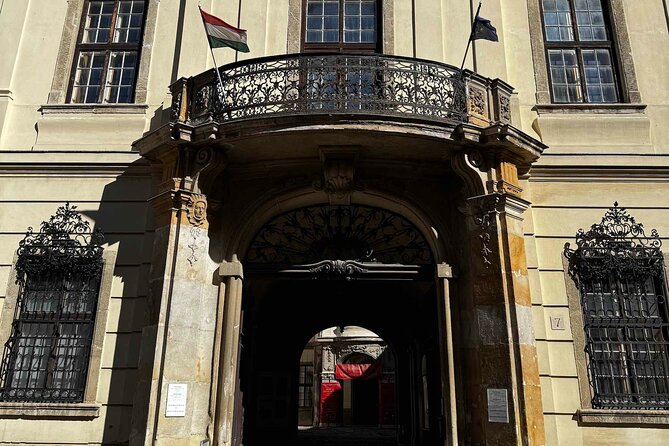
Your starting point is the Museum of Music History at Budapest, Táncsics Mihály u. 7, 1014 Hungary. This is a good choice because it gives you a “cultural warm-up” before you head into the fortress zone. Instead of dropping you into the middle of the big sightseeing chaos, you begin with the story of Hungary’s cultural roots and then the walk naturally leads you deeper into the Castle District.
A quick practical tip: charge your phone before you go. You will want GPS to stay steady, and audio playback plus maps can drain battery if you forget. Also, have your headphones ready before you start so you are not fumbling while trying to stand at the right spot.
Once you begin, you are basically walking a storyline. The stops are arranged so each new place answers a question the previous one raises, like how different communities shaped Budapest and how the fortress evolved for defense, ceremony, and survival.
More of Castle Hill, cobble by cobble:
- Budapest: Buda Castle Cave Tour
★ 4.7 · 5,677 reviews - Budapest: Buda Castle District Vampires and Myths Night Tour
★ 4.6 · 3,830 reviews - Budapest: Buda Castle Walk with Saint Stephen’s Hall
★ 4.5 · 3,012 reviews
GPS audio that actually follows you (and why that matters)
One of the best parts is the GPS-based system. When you are in the correct area at each attraction, the narration can trigger automatically. That turns the experience into something close to a guided route, minus the need to keep up with anyone.
This also gives you freedom. If you want to linger for photos at Fisherman’s Bastion, you can. If you want to step into a quieter side street for a minute, you can. If a viewpoint is crowded, you can wait, then continue when it clears.
You also get offline support: offline access to audio, maps, and geodata. In a hilly historic neighborhood, that reduces the stress of patchy connectivity. And there is a virtual playback option if you want to listen like an audiobook from anywhere before you even start walking.
Walking the Castle District stop by stop, from Jewish chapel to the National Gallery
Here is what you are likely to notice and why each stop is worth your time. I will also flag where you may want to adjust your expectations.
Mediaeval Jewish Chapel
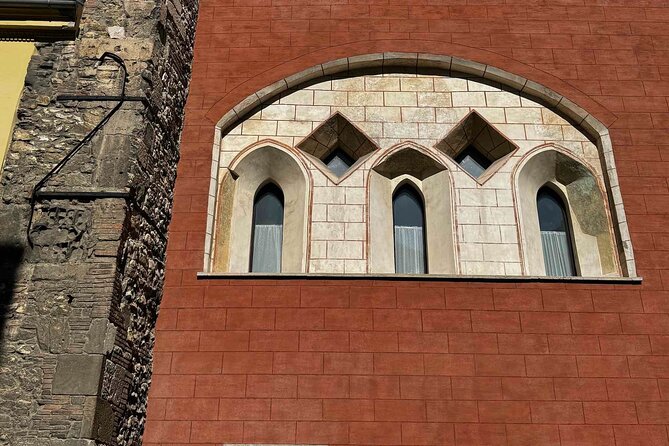
You pass the Mediaeval Jewish Chapel, a reminder that Budapest’s historic center was never one single story. The architecture and setting help you understand that multiple religious and cultural communities have shaped the area over centuries. If you like seeing history as lived, not just monumental, this stop sets the tone.
Vienna Gate
Next comes the Vienna Gate. Even from outside, it is a reminder of the Castle District as a strategic entry point. Audio here helps you connect the gate to larger questions of control, defense, and movement through the fortress walls. It is one of those locations where the stone looks simple until you understand what it guarded.
Memorial to Abdi Abdurrahman
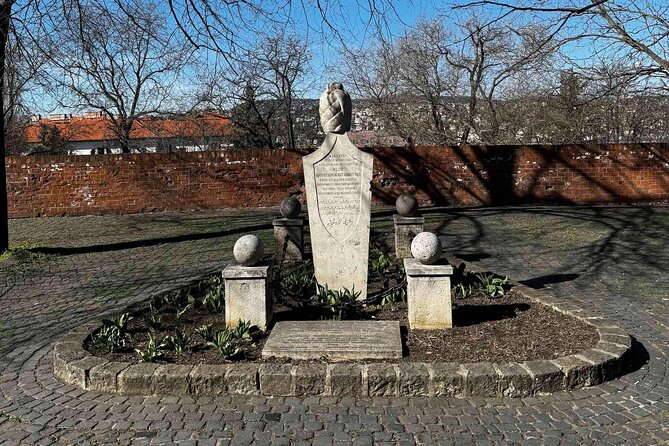
You then reach the Memorial to Abdi Abdurrahman. This is not a “photo for the feed” stop. It is more reflective, and the narration focuses on how cultures and civilizations overlapped in Budapest. If you tend to rush when you travel, this is a good moment to slow down for 30 to 60 seconds so the meaning lands.
Church of Saint Mary Magdalene (Saint Mary Magdalene’s tower)
The narration points out the tower of the Church of Saint Mary Magdalene. From here, you can start seeing the Castle skyline as a layered composition, not one flat view. You get the sense that the city’s identity is built upward, with churches and fortress walls shaping what you see from multiple angles.
Hospital in the Rock
Then the tour takes a sharp turn into survival stories with the Hospital in the Rock. This is a medical facility within caves beneath Buda Castle, tied to World War II experiences. Even if you do not spend time underground on your visit, the audio helps you visualize what was happening below ground, turning the caves from legend into context you can picture.
This is one of those stops where audio adds real weight. It is easy to walk past cave entrances or old tunnels and assume they are just old. Here, you are nudged to connect space to people.
Matthias Church
Matthias Church is where the walk turns into pure architecture appreciation. You get a sense of why this church became a symbol, not just a building. Audio guides your attention to the details and the symbolism tied to its most iconic features, so you are not only snapping photos, you are noticing.
If you are short on time, do not skip the look-around moment. Even a brief pause can help you slow your brain down and see the patterns and meaning.
Fisherman’s Bastion
After the church, you reach Fisherman’s Bastion, the panoramic terrace with views over Budapest and the Danube River. This is the “take a deep breath” section of the route. Even if you have seen photos before, the scale of the views hits differently in person.
Practical note: it can get busy here. Build in a little extra time if you want less crowd pressure for photos. Also, keep an eye on the weather. This is terrace time, and terrace time can mean wind.
Statue of St. Stephen I
The Statue of St. Stephen I is a clear, direct landmark moment in the walking flow. St. Stephen is Hungary’s founding father, and audio helps anchor why this figure matters to national identity. It is also a useful waypoint, mentally and physically, since it helps you orient yourself within the broader Castle grounds.
Holy Trinity Park
Holy Trinity Park is your calmer reset within the Castle District. The vibe here is more about quiet breathing space than big-ticket monuments. If you have been walking nonstop, this stop helps you reset before the route moves back into more story-heavy sites.
It is a good place to pause, drink water, and let your phone battery recover a bit if you are worried.
Labyrinth of Buda Castle
Now the tour leans into the mysterious side with the Labyrinth of Buda Castle. The audio frames it as a labyrinthine network of caves steeped in legends and folklore, with stories about hidden passages. This is a fun contrast to the Hospital in the Rock. One theme is survival and history, the other is myth and rumor.
Tip: keep your expectations flexible. You are not going to turn this audio tour into a full spelunking adventure unless you also arrange that separately. But listening here can make the Castle caves feel real, like they could swallow secrets again at any moment.
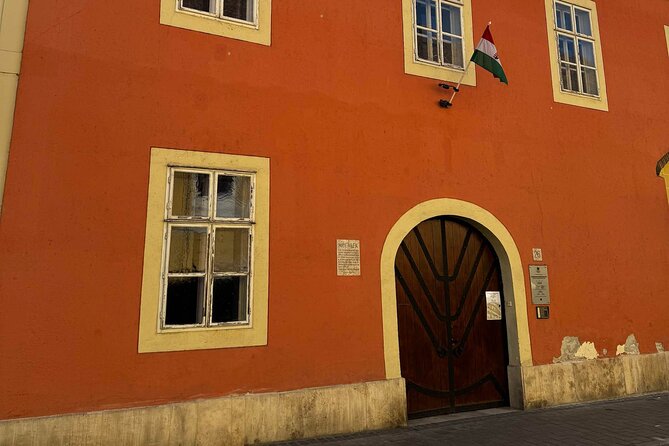
House of Houdini
Next you pass the House of Houdini. The narration connects Budapest to the legendary magician Harry Houdini, with ties that are described as mysterious and intriguing. If you like your history with a side of odd pop-culture legend, this is the type of stop that keeps the walk from becoming too heavy.
It is also a nice reminder that Budapest stories do not only belong to kings and wars. They also belong to performers, tricks, and the strange ways a city collects myths.
Archduke Joseph’s Palace (under restoration)
You then see Archduke Joseph’s Palace, and the tour notes it is undergoing restoration. That is important for your expectations. Views might be partially blocked, and surfaces might not look “complete.” Still, the narration helps you appreciate its role and historical significance even if the building is in a transitional moment.
If you want to photograph the palace, aim for angles that show the overall scale rather than expecting perfect scaffolding-free shots.
Hunyadi Courtyard
Hunyadi Courtyard is a smaller, more lived-in feeling pause. The narration frames it as a charming enclave where past echoes mingle with present-day life. This is the kind of stop that makes you notice small architectural rhythm: doorways, arches, and how people actually move through the space.
For anyone who hates feeling like every minute is a museum, courtyards are your friend. They keep the tour feeling human.
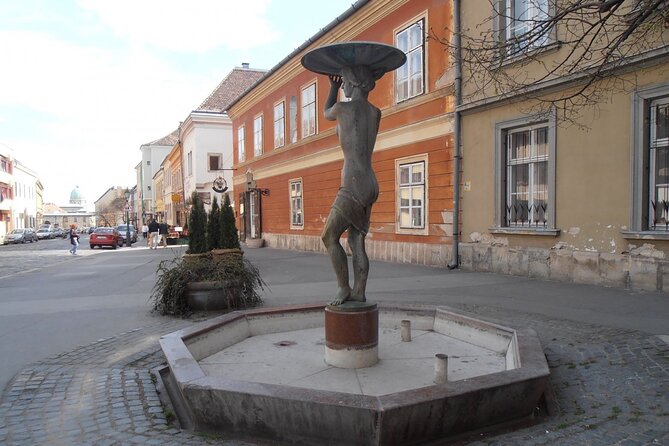
Fountain of King Matthias
The Fountain of King Matthias adds whimsy to the route. It is medieval past presented in a playful visual form. Audio here can help you understand why this fountain became a recognizable feature of the area, rather than just another decorative object.
If you love details, pause to look at the fountain longer than you think you need. Small symbolism is often where audio makes the biggest difference.
Buda Castle
Then you reach the main complex, majestic and old, with the narration framing Buda Castle as a symbol of Budapest’s history and architectural splendor. Even if you do not go deep into interior spaces, the audio helps you understand the Castle as a whole system: fortress, palace, city center of power, and a stage for human drama.
This is also where the tour’s story threads tie together. The overview mentions learning where Dracula was imprisoned, and that kind of legend usually makes the Castle complex feel more personal, like a real place where stories could have started. Use the audio here to match legend to specific Castle spaces you are walking through.
Hungarian National Gallery (Royal Palace)
Finally, you end at the Hungarian National Gallery at Budapest, Szent György tér 2, 1014 Hungary. The Royal Palace setting makes the finish feel like a natural “capstone,” especially if you have been thinking about how Budapest presents its identity through art as well as architecture.
If you want a smooth wrap, plan a short stop after the tour. Even if you do not go inside, stepping into the space around the gallery helps the end point feel earned.
Price and value: is $14.99 fair for this Castle walk?
At $14.99 per person, this is priced like a single activity, not a guided private tour. For that money, you get a GPS walk, offline audio and maps, and directions to help you start in the right spot. You also get unlimited lifetime use of the tour before and after your booking date, plus a virtual playback option.
That value adds up if you will use it more than once or if you are sharing it with someone who also likes self-guided exploration. Even if you only listen once, the content is designed for a focused 1 hour 20 minutes to 1 hour 40 minutes loop. In other words, you are buying time well spent, not paying for a long day out you might not finish.
One more angle: Castle District sightseeing often involves paying for multiple small add-ons, or spending hours bouncing between places with no plan. This tour gives you a structure so you do not wander aimlessly on steep streets.
Still to cross in Budapest
- Budapest: Parliament Building Entry Ticket and Audio Guide★ 4.5 · 3,844 reviews
- Budapest Danube Cruise with Drink, Audio Guide, Margaret Island★ 4.5 · 1,036 reviews
- Budapest River Cruise with 1 Free Tokaj Frizzante and Audio Guide★ 4.5 · 473 reviews
Who this audio tour is best for (and who should pass)
This works best for you if you like:
- Walking and want your hands free for photos
- Story-driven history, including WWII-era survival tales and local legends
- A tour that gives you structure but lets you move at your pace
It might be less ideal if you:
- Hate listening through headphones while walking
- Want a live Q and A or flexible route changes on the spot
- Prefer a completely guided format with no need to manage your phone
For families, it can work nicely because the narration controls pacing, and you can pause for snacks. For couples, it is a good shared soundtrack for the Castle scenery. Solo travelers get the biggest benefit because the GPS structure keeps you from second-guessing your route.
Practical timing tips for a better Castle District experience
You do not need a timed entry for the audio itself, but you do need common sense for the sights. Start when the light helps the views, because Fisherman’s Bastion and the Danube panoramas are easier to enjoy with less glare. Also, expect uneven ground, steps, and hills.
If you are sensitive to walking, plan to take breaks. Holy Trinity Park is one of your natural pause points, but you can also stop anywhere the route is quiet, especially in courtyards.
Should you book this Budapest Castle District audio tour?
I would book it if you want a self-guided GPS walking tour that turns the Castle District into a story you can follow. The combination of offline audio, stop-triggered playback, and a route that mixes Matthias Church, Hospital in the Rock, Fisherman’s Bastion, and a clear National Gallery finish is a smart way to make your time count.
I would skip it if you do not want to manage your own devices, because the tour requires your smartphone and headphones. Also, if you already know Budapest deeply and you only want a quick highlights sprint, you might find the stop-by-stop narration slows your pace.
If you like walking and you enjoy facts that come with personality, this is one of the easier ways to get more meaning out of Buda Castle without committing to a full-day guided tour.
FAQ
How much does the Budapest Castle District self-guided audio tour cost?
It costs $14.99 per person.
How long is the walking audio tour?
The tour runs about 1 hour 20 minutes to 1 hour 40 minutes.
Where do I start and where does the tour end?
You start at the Museum of Music History, Táncsics Mihály u. 7, 1014 Hungary, and you end at Szent György tér 2, 1014 Hungary at the Hungarian National Gallery.
Do I need an internet connection while walking?
No. The tour includes offline access to audio, maps, and geodata.
What do I need to bring with me?
You need your own smartphone and headphones.
What is the cancellation policy?
Cancellation is free, and you can cancel up to 24 hours in advance for a full refund. If you cancel less than 24 hours before the start time, you do not get a refund.
More Self-Guided Tours in Budapest
- Budapest Paddle Steamer Danube Cruise with Tokaj & Audio Guide★ 4.5 · 338 reviews
- Budapest Audio Guide Cruise with Day, Sunset and Night Options★ 3.5 · 295 reviews
- Sightseeing Cruise on the Danube with Audio Guide in Budapest★ 3.5 · 229 reviews
- Budapest Danube 1 Hour Sunset or Night Cruise with Audio Guide★ 4.0 · 204 reviews
The newest crossings added in Budapest






Castle District Walks & Tickets, compared.

Buda Castle District Vampires and Myths Night Tour
Read our review →
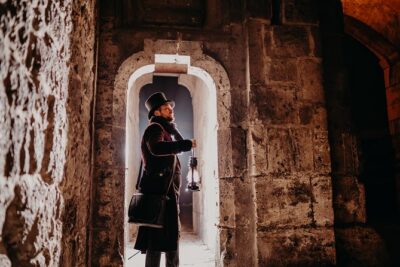
Buda Castle District Dark History, Legends and Vampire Night Tour
Read our review →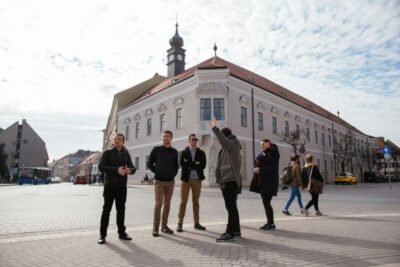
Buda Castle District Walking Tour with a Historian
Read our review →

Walking tour in the Buda Castle incl. Fisherman’s Bastion
Read our review →Browse the lists this tour appears in